Monday, December 17, 2007

Merton on Advent

“The certainty of Christian hope lies beyond passion and beyond knowledge. Therefore we must sometimes expect our hope to come in conflict with darkness, desperation and ignorance. Therefore, too, we must remember that Christian optimism is not a perpetual sense of euphoria, an indefectible comfort in whose presence neither anguish nor tragedy can possibly exist. We must not strive to maintain a climate of optimism by the mere suppression of tragic realities. Christian optimism lies in a hope of victory that transcends all tragedy: a victory in which we pass beyond tragedy to glory with Christ crucified and risen. …

“It is important to remember the deep, in some ways anguished seriousness of Advent, when the mendacious celebrations of our market culture so easily harmonize with our tendency to regard Christmas, consciously or otherwise, as a return to our own innocence and our own infancy. But the Church in preparing us for the birth of a “great prophet,” a Savior and a King of Peace, has more in mind than seasonal cheer. The Advent mystery focuses the light of faith upon the very meaning of life, of history, of man, of the world and of our own being. In Advent we celebrate the coming and indeed the presence of Christ in our world. We witness to His presence even in the midst of all its inscrutable problems and tragedies. Our Advent faith is not an escape from the world to a misty realm of slogans and comforts which declare our problems to be unreal, our tragedies nonexistent.”
Thomas Merton. Seasons of Celebration. New York: Farrar, Straus and Giroux Publishers, 1950: 88-89


“The human soul is still the image of God, and no matter how far it travels away from Him into the regions of unreality, it never becomes so completely unreal that its original destiny can cease to torment it with a need to return to itself in God, and become, once again, real.”
-Thomas Merton. The New Man. New York: Ferrar, Straus, Giroux Publishers, page 112

Saturday, December 15, 2007

Converts 'R' Us

Aramis and I often reflect on the way that the ideas of French scholar René Girard, refracted through the writings and talks given primarily by mentor and, by the grace of God, friend, Gil Bailie, helped lead us to our conversion to the Catholic Church. This is a conundrum that will continue to fascinate and call for prayerful meditation for many years to come.

But here I want to make note of something slightly less anthropological and more theological. It is the fact that, for me, certain literary mentors are more helpful to me than others. I cannot place my finger on the reason for this, and I feel a certain degree of embarrassment in saying so.

Let me give just three examples: I read with the utmost respect the words of the Holy Father, Benedict XVI, in his Jesus of Nazareth, but I sense that -- right now, mind you -- his words do not resonate within me. Likewise, Father John McCloskey, III has penned a great and important work, Good News, Bad News - Evangelization, Conversion, and the Crisis of Faith, that addresses pastorally and sensitively the way to speak about the Catholic Church with skeptics, fall-away Catholics, Protestants, and non-Christians. I know to my core that it is a vital work for today, but, again, my antenna seems pointed a bit askew to its signals. But Scott Hahn's new book, Reasons to Believe, evokes an inner series of "Yes!" "Yes!" "Yes!" affirmatives that make me want to sit at this fellow's feet and digest this material because I KNOW it will be useful for me and my situation (he continues the plodding and rather flat-footed pun sub-headings, but I overlook that).

I can only hope that the Holy Spirit will open similar doors of perception within me to the wisdom of the Holy Father and Fr McCloskey. But for now, it is with a fellow convert that my non-fiction catechesis continues. Here is an hors d'oeuvre:
...the laws of God, like the law of gravity, do not depend upon how I feel about them. They are inexorable, and God has willed them to be knowable, even in the absence of strong emotion or apparent miracles ...

'Shot for Wearing Shorts'

Now in the dark, cold days of Advent, we have the high and holy feast of the Nativity to which to look forward. But, ah, after that? Epiphany, of course, but then the drab, drear weeks of winter will drag on and on. The cargo pocketed shorts will languish in the drawer waiting the first inklings of warmer weather to come. Right?

If you think the kerfuffle over the jerseys of the Istanbul team Fenerbahce has shown the thin-skin of Muslims over apparel, just remember this:

Iraqis shot 'for wearing shorts'

Iraqi policeman at a checkpoint in Baghdad
The men were stopped in their vehicle in southern Baghdad
The coach of Iraq's tennis team and two players were shot dead in Baghdad on Thursday, said Iraqi Olympic officials.

Coach Hussein Ahmed Rashid and players Nasser Ali Hatem and Wissam Adel Auda were killed in the al-Saidiya district of the capital.

Witnesses said the three were dressed in shorts and were killed days after militants issued a warning forbidding the wearing of shorts. Read all of “Shot for Wearing Shorts.”

Amboy has a work-in-progress: The List of Things That Offend Muslims.

Thursday, December 13, 2007

New Skool Christmas Carol Quiz

Figure out the Christmas Carol title from the clue: [HT: Jason Schmock]

1. Not here in an animal's dish
2. Smack the Passageways
3. Move and speak towards the elevated plains
4. Yahweh sleep you happy dudes
5. Hey! The #1 angelic beings belt it out.
6. It showed up on a cloudless 12 at night
7. Shaking Chimes
8. Happiness to the planet
9. 12-25 shrubbery song
10. Get here if you're reliable
11. Like a strainer + time when the sun is down
12. Small city of Christ's birth song
13. Quiet non-day
14. The premier not 12th letter of the alphabet
15. XII 24hrs. of 12-25
16. Not down on the roof of the home
17. Us Trio that�s royalty from China (exist)
18. Us dream not us a happy December 25th
19. Spill the 411 on the baby
20. Small percussionist lad
21. Tim Allen's movie character will appear in a hood
22. Song about a hoofed animal with a crimson schnozola
23. Chilled the crystallized H20 male
24. Don't stop the winter precipitation
25. Traversing in a 4th season amazing country
Answers here

St. Lucy and Holy Violence? - And the Violent Bear It Away

From Father Mark at Vultus Christi.
"Holy violence is an expression of the virtue of fortitude. It is related to the boldness that comes from the Holy Spirit."
He continues,
"There are those, even within the Church, who think that peace — or what they would like to call peace — is worth any price. They will go to any length to avoid confrontations, to appear to agree when they disagree, to approve when they disapprove, to keep everyone happy. The moral relativism pandemic in society today fosters this attitude. The relativists would have us believe that there are no absolute truths, that nothing is absolutely wrong or absolutely right. They preach a wishy-washy adaptability to whatever the prevailing trends happen to be, and they call it tolerance. The relativists are forever saying, “To each his own.” The idea of going against the social or political grain fills them with horror. There are no martyrs among them."

"And Saint Lucy? She could have saved her life in this world, had she not insisted on being altogether more violent than the torturers who took her life by violence. More violent? Yes. More violent, because Saint Lucy applied all the strength of her virginal love swiftly, intensely, and forcefully to bearing away the Kingdom of Heaven."

When reading this, I kept going back to this quote of Father Mark,
"Holy violence is an expression of the virtue of fortitude. It is related to the boldness that comes from the Holy Spirit."
It is a hard pill to swallow, but there is something in this thought that cannot be denied.


The typical hedonist today does not aspire to anything larger and higher, but settles for "feeling good". Such a life does not require fortitude.
Here is more on the virtue of fortitude.

Wednesday, December 12, 2007

Choose Your Candidate

with the Candidate Calculator.

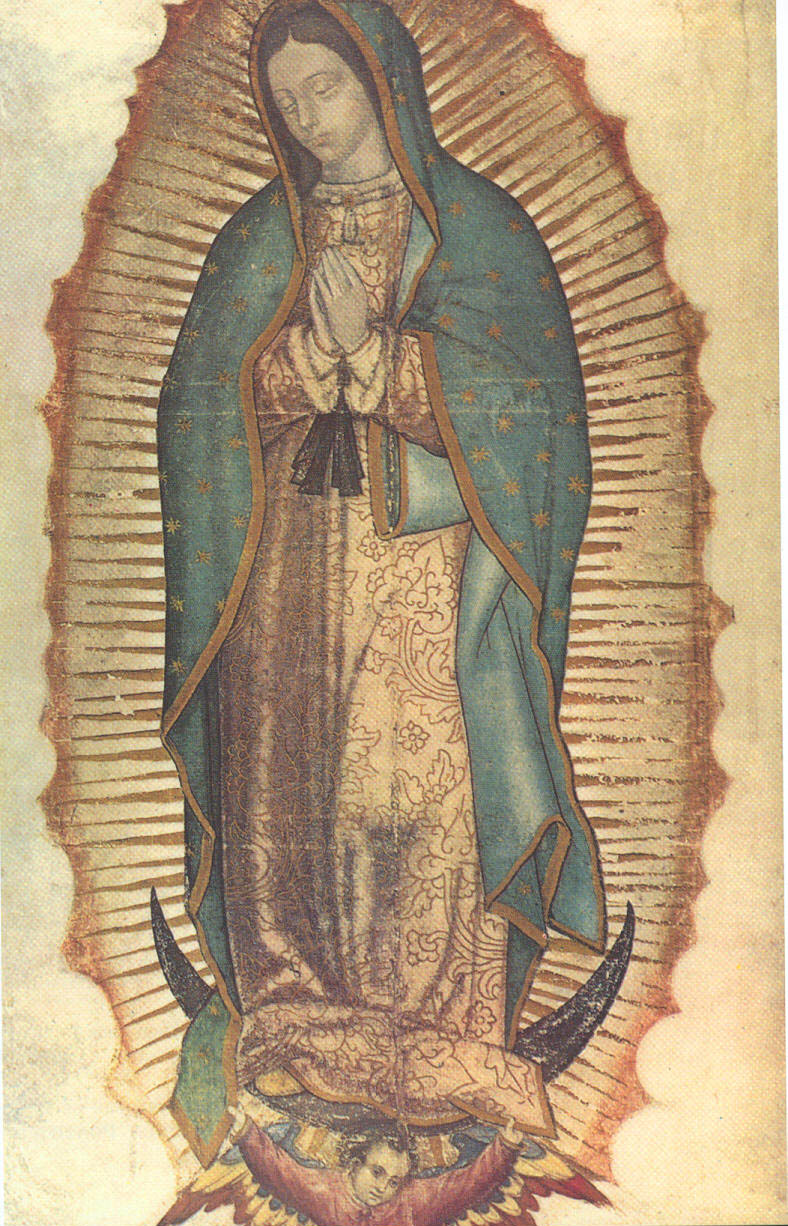
Our Lady of Guadalupe +

Mr. Jim Coop quotes Our Lady as we commemorate her feast day today:
"Am I not here, I who am your Mother? Are you not under my shadow and protection?" The Blessed Virgin Mary spoke these words to an Indian merchant on December 12, 1531, during the last of her several appearances to him. It is quite probable that one of the consequences of these apparitions was the prevention of an armed revolt of the Mexican Indian population against their Spanish conquerors. Another was the greatest mass conversion to Christianity in the history of the Church.

Today, we are being told that there is a "clash of civilizations" between the Western and Islamic worlds. Few people, however, are asking if the Mother of God can help prevent this clash from becoming cataclysmic. Continue reading …

Monday, December 10, 2007

"The Virgin Without Sin"

From Chronicles of Atlantis Athos links us to Father Raniero Cantalamessa, OFM Cap with a most powerful message.

Instead of liberation from sin, all efforts today are focused on liberation from regret over sin; instead of fighting against sin we fight against the idea of sin, replacing it with something very different, namely, "guilt feelings." We do precisely that which in every other sphere is considered the worst thing of all, that is, we deny the problem rather than resolve it, we push back and bury evil in the unconscious instead of removing it.
Read more.

Feast of the Virgen de Guadalupe, Dec 12

Yesterday,

on a day hardly safe for salt trucks and police, our standing-room-only Parish celebrated the Feast of Our Lady of Guadalupe.

Special Mass ceremony honors the Virgin Mary
Maria Luisa Zamudio, administrative coordinator of the ISU’s Bilingual Education program, lived in Mexico City, the site of a basilica in honor of the Virgin. She described people crowding the streets days in advance of the Dec. 12 celebration, which is a national holiday in Mexico.

“People would walk for days to visit the Virgin no matter what the weather,” she said.

St. Mary’s parishioners proved that they will brave the freezing rain and icy sidewalks of Bloomington to honor the Virgen de Guadalupe.

On the Lighter Side? Staying awake, does that go for remembering as we get older?

I received these 2 emails this morning, one right after another, and thought, hum, how appropriate if I put them together into one. So here you are. The first is a quote from Thomas Merton:

“We are like pilots of fogbound steamers, peering into the gloom in front of us, listening for the sounds of other ships, and we can only reach harbor if we keep alert. The spiritual life is, then, first of all a matter of keeping awake. We must not lose our sensitivity to spiritual inspirations. We must be always able to respond to the slightest warnings that speak, as though by a hidden instinct, in the depth of the soul that is spiritually alive.”
-Thomas Merton Thoughts in Solitude [page 39]

And the second email just had this:


Saturday, December 08, 2007

The Hawk on Hugh on Mitt

Though I like Romney AND Hewiit, I must note Iowahawk's hilarious take down of Hugh Hewitt's effusion over Romney's speech.

The Immaculate Conception +

Mary, mother of Jesus as the Immaculate Conception. Bartolomé Esteban Murillo. Museo del Prado

On this Feast Day of the Immaculate Conception, Mark Shea (the Catholic Bill Moyers) gives us a nifty summation of understanding and controversies. And, from an earlier post, a tribute to Our Lady by way of Zefferelli and Gibson.

Friday, December 07, 2007

Hauerwas on the Reformation

A relative and admired professor at Duke Divinity School, Stanley Hauerwas, gives one of his smokin' &%#X-prophetic homilies for Reformation Sunday:
I must begin by telling you that I do not like to preach on Reformation Sunday. Actually I have to put it more strongly than that. I do not like Reformation Sunday, period. I do no understand why it is part of the church year. Reformation Sunday does not name a happy event for the Church Catholic; on the contrary, it names failure. Of course, the church rightly names failure, or at least horror, as part of our church year. We do, after all, go through crucifixion as part of Holy Week. Certainly if the Reformation is to be narrated rightly, it is to be narrated as part of those dark days.

Reformation names the disunity in which we currently stand. We who remain in the Protestant tradition want to say that Reformation was a success. But when we make Reformation a success, it only ends up killing us. After all, the very name ‘Protestantism’ is meant to denote a reform movement of protest within the Church Catholic. When Protestantism becomes an end in itself, which it certainly has through the mainstream denominations in America, it becomes anathema. If we no longer have broken hearts at the church’s division, then we cannot help but unfaithfully celebrate Reformation Sunday. Continue reading ...


UPDATE: Read The Seat of the Reformation.

Thursday, December 06, 2007

Wednesday, December 05, 2007

ADVENT CALENDAR

(Click on "Advent Calendar" below to go to the link.)

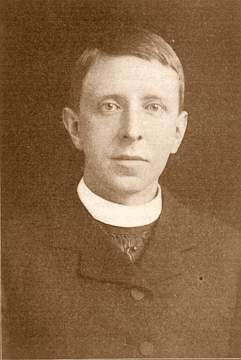
Skipping through internet sites for material on Monsignor Robert Hugh Benson (the previous post) I stumbled across this interesting site "The Weight of Glory" created by Clayton Emmer. May I suggest that you check out his Advent Calendar. He has put together some wonderful reflections and meditations so far. ENJOY.

Through the person was the person of God

Doctors of the Catholic Church 12/5

The below meditation by Monsignor Robert Hugh Benson (+ 1914), a convert to Catholicism, is best known for his novels about the faith. This is a dynamic, universal perspective, from all dimensions, and how the humanity of Jesus united to his divinity, reveals God’s infinite and tender concern for the human race forever. It is a dramatic viewpoint that will help us treasure and appreciate Jesus Christ made possible through the Church, and his Mother, the Blessed Virgin Mary. Benson shares with us a love story that reveals the Creator’s unlimited and beautiful love, mercy and profound pity for us who need redemption. It is given to us not only from the Blessed Trinity, Jesus Christ and Mary, but from all human beings who have received those gifts from God. God helps everyone to help us receive those same gifts through the rich mercy of God’s sanctifying power. God gives to every creature all the blessings that are possible when we pray, love, and do good.

Meditation of the Day

It is believed by Christians that this work, of redemption and revelation was accomplished through human nature assumed into union with the divine – that God did not, so to speak, act merely in virtue of his deity, but through humanity as well – that, first a nation, then a tribe, then a family, and then a person, were successively drawn from the world as a whole – Israel, Judah, the line of David, and finally, Mary – and then, by a unique substance was produced so perfect and so pure as to be worthy, in a sense, the entire summary of the Old Testament – that his substance was then assumed into union with God, and used for his divine purposes – by which he lived and suffered and died as man, was the instrument of both revelation and redemption; that by a human voice he spoke, that human hands were raised to bless, that a human heart loved and agonized, and that these human hands, heart, and voice – broken, pierced, and silenced as they were – were the heart, hands, and voice of Very God.

Consider that claim carefully. Through the person was the person of God, the nature by which he was accessible and energetic was the nature of man. It is by union with that humanity that Christians believe themselves redeemed. This in that last emphatic act of life of him humiliation he took bread, and cried, not here is my essential self, but “This is my Body which is given for you,” since that Body was the instrument of redemption. And, if the Christian claim is to be believed, this act was but a continuation (though in another sense) of that first act known as the Incarnation.

He who leaned over the bread at that “last sad supper with his own” had, in another but similar manner, leaned upon Mary herself with similar words upon his lips.

Tuesday, December 04, 2007

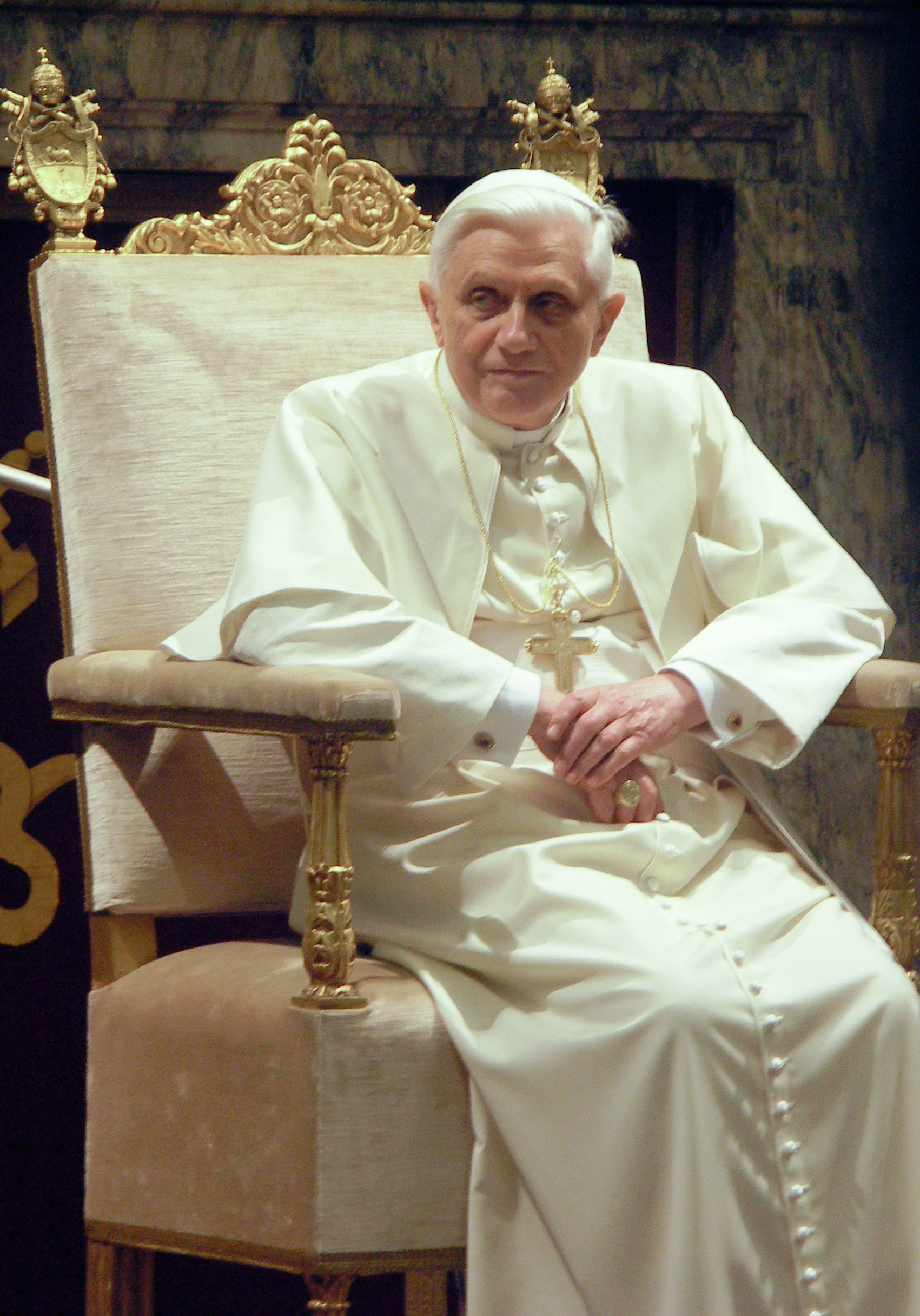
Summing Up "Spe Salvi" - BXVI

The world needs God, otherwise it remains without hope, said Benedict XVI when he summarized the central message of his encyclical "Spe Salvi."

The Pope said this today before reciting the midday Angelus with those gathered in St. Peter's Square. He also spoke on the meaning of Advent, which begins today.

Advent, the Holy Father said, "is the propitious time to reawaken in our hearts the expectation of him 'who is, who was and who is coming.'"

The Pontiff regarded the First Sunday of Advent as "a most appropriate day to offer to the whole Church and all men of good will my second encyclical, which I wanted to dedicate to the theme of Christian hope."

Benedict XVI noted that in the New Testament "the word hope is closely connected with the word faith." Hope, he added, "is a gift that changes the life of those who receive it, as the experience of so many saints demonstrates."

He asked: "In what does this hope consist that is so great and so 'trustworthy' as to make us say that 'in it' we have 'salvation'?

"In substance it consists in the knowledge of God, in the discovery of his heart as a good and merciful Father."

"With his death on the cross and his resurrection," added the Pope, Jesus "has revealed to us his countenance, the countenance of a God so great in love as to communicate to us an indestructible hope, a hope that not even death can crack, because the life of those who entrust themselves to this Father always opens onto the perspective of eternal beatitude."
Continue reading …

Sunday, December 02, 2007

Saturday, December 01, 2007

Stay Awake - 1 Advent

The Vigil - John Pettie

The uncertainty of the hour should not cause us to be careless but to be vigilant. If the liturgical year is at its start, the civil year is at its end. This is an optimal occasion for a sapiential reflection on the meaning of our existence. In autumn, nature itself invites us to reflect on time that passes. That which the poet Giuseppe Ungaretti said of the soldiers in the trenches on the Carso front in the First World War holds for all men: "They are on the trees as leaves in autumn." They are ready to fall at any moment. "Time passes," said our Dante Alighieri, "and man pays no attention."

[ ... ]

Let us see what faith has to tell us about this fact that everything passes. "Yet the world and its enticement are passing away. But whoever does the will of God remains forever" (1 John 2:17). There is someone who does not pass, God, and there is also a way for us not to completely disappear: Do God's will, that is, believe and follow God. In this life we are like a raft carried along by the current of a roaring river headed for the open sea, from which there is no return.

At a certain point the raft comes near to the bank. It is now or never and you leap onto the shore. What a relief when you feel the rock under your feet! This is the sensation often felt by those who come to the faith. We might recall at the end of this reflection the words left by St. Teresa of Avila as a kind of spiritual testament: "Let nothing disturb you, nothing frighten you. All things are passing. God alone remains."