Showing posts with label Literature. Show all posts

Tuesday, March 10, 2009

Signing executive order will relieve suffering & promote healing - do you really think so?

tip to neo-neocon

In this excerpt Dostoevsky’s Grand Inquisitor is addressing Christ, who has returned to earth but is arrested and imprisoned again:

Oh, never, never can [people] feed themselves without us [the Inquisitors and controllers]! No science will give them bread so long as they remain free. In the end they will lay their freedom at our feet, and say to us, “Make us your slaves, but feed us.” They will understand themselves, at last, that freedom and bread enough for all are inconceivable together, for never, never will they be able to share between them! They will be convinced, too, that they can never be free, for they are weak, vicious, worthless, and rebellious. Thou didst promise them the bread of Heaven, but, I repeat again, can it compare with earthly bread in the eyes of the weak, ever sinful and ignoble race of man?

Monday, February 09, 2009

Simon's Fate

I want to speak briefly about one of the finest literary analyses ever written, William Golding's Lord of the Flies. If you passed through American high school education, you probably (had to) read it with all the relish of eating leftovers from the very back of the refrigerator.

Nevertheless, if you are fortunate - no, blessed by Providence - you may one day come across another analysis, that done by Gil Bailie of the Cornerstone Forum that was based on two works: Golding's (above) and Euripides' The Bacchae. In this analysis, Bailie neatly summarizes nearly the whole of the cultural anthropology of René Girard (called mimetic theory) and limns the deplorable fallen state of the mankind drawing from these two deep pools of wisdom, modern and Tragedian. My own meager fictional (and didactic) offering, The Dionysus Mandate, was born a runt from these two titan parents.

I want to suggest that Golding's work also provides us with a further insight. If one reads of the "choirboys" and their leader, Jack, one is looking at figures looming largely and dangerously in today's world: any who either have fallen out of the influence of the Christian gospel - neo-pagans in search of another pantheon to worship - or those who never were under its influence save in mimetic rivalry - the Scimitar. The former is gaining new vitality in the ruins of the old West, picking over its bones. The latter is swiftly immigrating into the West and propagating offspring at a rate that will overwhelm non-Scimitar man, conservative estimates say, by the mid-21st century.

Both worship a very different deity than the diminishing Christian faith of the West. Who represents the Christian in Golding or Euripides? Exactly. He does not exist.

But the one who represents the dying Westerner is present in Golding, at least: Simon. He employs the fruits of the Christian West - science - but cannot, in my opinion, be said to represent the Catholic or non-Catholic Christian.

And what is Simon's fate? He brings news from the realm of the primitive sacred - the false transcendence of the "pig's head on a stick" - to the boys on the beach. His is the fate of all victim-fodder before the mob of humanity possessed by the primitive sacred. He is murdered.

I fear that without the foundation of the Christian faith, western man will suffer the same fate as Simon. For fate it is to all who abandon the roots of the West, old Christendom. The power of the primitive sacred, in either its modern nihilist form or the street-mob Scimitar form is far too strong for the non-believing scientist trying to maintain himself with no true transcendence, no "external Mediator."

So Lord of the Flies is of only limited value to one seeking a way to live as a Christian in these darkening days of the old West. The fiction has yet to be written that provides such prescriptive answers. But who knows? Perhaps the author is out there right now, listening and following that divine muse insistently that he or she dictate the good news.

Thursday, July 31, 2008

Monday, July 07, 2008

Mimesis and Theory


Product Description

Mimesis and Theory brings together twenty of René Girard's uncollected essays on literature and literary theory, which, along with his classic, Deceit, Desire, and the Novel, have left an indelible mark on the field of literary and cultural studies. Spanning over fifty years of critical production, this anthology offers unique insights into the origin, development, and expansion of Girard's "mimetic theory"—a groundbreaking account of human interaction and of the genesis of cultural forms.

Arranged chronologically in order of publication, the essays run the gamut of Western literary culture, from Racine and Shakespeare to the existentialist writings of Simone de Beauvoir and Jean-Paul Sartre. The authors who have most influenced Girard—Stendhal, Proust, and Dostoevsky—receive extended treatment. In addition, Girard's observations on the changing landscape of literary studies are chronicled in several essays devoted to psychoanalysis, formalism, structuralism, and post-structuralism.

Though at times overshadowed by his work in religious and cultural anthropology, Girard's work in the area of literary studies has been the wellspring of his thought. All of the essays contained in this volume develop the idea that the greatest authors are also the greatest students of human nature, for their artistic intuitions are generally more penetrating than the analyses of the philosophers or the social scientists. Thus Girard does not offer us a theory of literature but literature as theory.

Monday, February 04, 2008

Dorothy Sayers & Raymund Schwager?

Reading the Meditation of the Day in the Magnificat this morning I was struck by how Dorothy Sayers captured the major essence of Raymund Schwager's book that I have been promoting here for all to read, Banished from Eden - Original Sin and Evolutionary Theory in the Drama of Salvation.

I the image of the Unimaginable
In the place where the Image and the Unimagined
are one,
The Act of the Will, the Word of the Thought,
the Son
In whom the Father's selfhood is known to Himself,
Speak to Man in the place of the Images.
You that We made for Ourself in Our own image,
Free like Us to experience good by choice,
Not of necessity, laying your will in Ours
For love's sake creaturely, to enjoy your peace,
What did you do? What did you do for Us
By what you did for yourselves in the moment
of choice?
O Eve My daughter, and O My dear son Adam,
Try to understand that when you chose your will
Rather than Mine, and when you chose
to know evil
In your way and not in Mine, you chose for Me.
It is My will you should know Me as I am -
But how? for you chose to know your good as evil,
Therefore the face of God is evil to you,
And you know My love as terror, My mercy
as judgment,
My innocence as a sword; My naked life
Would slay you. How can you ever know Me then?
Yet know you must, since you were made for that;
Thus either way you perish. Nay, but the hands
That made you, hold you still; and since you
would not
Submit to God, God shall submit to you,
Not of necessity, but free to choose
For your love's sake what you refused to Mine.
God shall endure, and what man chose to know
God shall know too - the experience of evil
In the flesh of man; and certainly He shall feel
Terror and judgment and the point of the sword;
And God shall see God's face set like a flint
Against Him; and man shall see the Image of God
In the image of man; and man shall show
no mercy.
Truly I will bear your sin and carry your sorrow,
And, if you will, bring you to the tree of life,
Where you may eat, and know your evil as good,
Redeeming that first knowledge. But all this
Still at your choice, and only as you choose,
Save as you choose to let Me choose in you.

Who then will choose to be the chosen of God,
And will to bear Me that I may bear you?

Dorothy L. Sayers (+ 1957) was a renowned British dramatist, novelist, poet, and Christian essayist.

As daughters and sons of those very first humans, "O Eve My daughter, and O My dear son Adam," we continue, in this generation, to feel the weight of "what you did for yourselves in the moment of choice?" Read Banished from Eden to grasp the mimetic weight of choice.

Sunday, February 03, 2008

Why Kids. Can't. Focus.

A librarian bemoans the avalanche of information that students -- and other readers -- must try to master today.
"How long is it?" has replaced "Will I like it?" The students' finicky inclinations, as well as my own recent hasty approach to reading, bothered me enough to try to trace the root cause. I suspect that the tipping point in information overload has tipped. Students' aversion to reading does not necessarily signal a weakness, much less a dislike of reading. For them, and now maybe for me, moving on to something else is an adaptive tactic for negotiating the jungle that is our information-besotted culture of verbiage.

These kids manage to survive by bushwhacking through the muddle -- while seamlessly dealing with an e-mail, a Word document or a 50-page PDF from the scholarly database JSTOR. It's taken them just a few years to arrive at the same conclusion that I've reached after a lifetime of sustained reading: The pursuit of knowledge in the age of information overload is less about a process of acquisition than about proficiency in tossing stuff out. By necessity, we spend more time quickly scanning manuals, king-size novels, the blogosphere and poems in the New Yorker than we do scrutinizing their contents for deeper meaning.

This is the price we pay for the changed demands in reading. Pulitzer Prize-winning biographer Stacy Schiff defines this new reading terrain as "the paradox of our age." We've grown into a culture of searchers, not readers. "Surely, we have never read, or written, so many words a day," Schiff writes. "Yet increasingly we deal in atomized bits of information, the hors d'oeuvres of education."
Read all … yeah, right.

Wednesday, December 05, 2007

Through the person was the person of God

Doctors of the Catholic Church 12/5

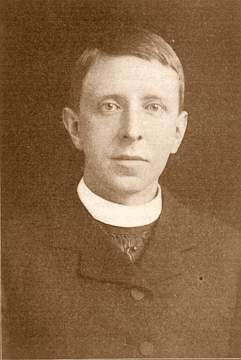
The below meditation by Monsignor Robert Hugh Benson (+ 1914), a convert to Catholicism, is best known for his novels about the faith. This is a dynamic, universal perspective, from all dimensions, and how the humanity of Jesus united to his divinity, reveals God’s infinite and tender concern for the human race forever. It is a dramatic viewpoint that will help us treasure and appreciate Jesus Christ made possible through the Church, and his Mother, the Blessed Virgin Mary. Benson shares with us a love story that reveals the Creator’s unlimited and beautiful love, mercy and profound pity for us who need redemption. It is given to us not only from the Blessed Trinity, Jesus Christ and Mary, but from all human beings who have received those gifts from God. God helps everyone to help us receive those same gifts through the rich mercy of God’s sanctifying power. God gives to every creature all the blessings that are possible when we pray, love, and do good.

Meditation of the Day

It is believed by Christians that this work, of redemption and revelation was accomplished through human nature assumed into union with the divine – that God did not, so to speak, act merely in virtue of his deity, but through humanity as well – that, first a nation, then a tribe, then a family, and then a person, were successively drawn from the world as a whole – Israel, Judah, the line of David, and finally, Mary – and then, by a unique substance was produced so perfect and so pure as to be worthy, in a sense, the entire summary of the Old Testament – that his substance was then assumed into union with God, and used for his divine purposes – by which he lived and suffered and died as man, was the instrument of both revelation and redemption; that by a human voice he spoke, that human hands were raised to bless, that a human heart loved and agonized, and that these human hands, heart, and voice – broken, pierced, and silenced as they were – were the heart, hands, and voice of Very God.

Consider that claim carefully. Through the person was the person of God, the nature by which he was accessible and energetic was the nature of man. It is by union with that humanity that Christians believe themselves redeemed. This in that last emphatic act of life of him humiliation he took bread, and cried, not here is my essential self, but “This is my Body which is given for you,” since that Body was the instrument of redemption. And, if the Christian claim is to be believed, this act was but a continuation (though in another sense) of that first act known as the Incarnation.

He who leaned over the bread at that “last sad supper with his own” had, in another but similar manner, leaned upon Mary herself with similar words upon his lips.

Wednesday, October 24, 2007

Snake Handler or Snake Stomper? A Literary Rant


(Apologies to any genuine snake handlers . . .)

As a favor to a former student, I proofread a paper on D. H. Lawrence. The paper was fine as a lit. paper, but some of the facts that came out in it were head scratchers for me.

It was paper was on The Plumed Serpent (I haven't read it, but have at various times read most of Lawrence's other work). A key episode in the novel is when the character Kate takes part in a traditional Aztec snake dance and experiences a rebirth. The raw, primitive masculinity of the guys in the dance make her feel like a virgin ("Uw! Touched for the very first time.") She is figuratively resurrected as an Aztec goddess. Eventually she marries a key figure in the Aztec dance revival, who is himself a figurative ressurection of the Aztec hummingbird god--the hummingbird sucking nectar from a flower being connected with ritual bloodletting. (Resident Girardians take note.) All of this has much to do with "blood consciousness" and "phallic consciousness" and Lawrence's ideal of womanhood, which is earthy and, er, submissive. (Feminists take note).

Two facts came out in the paper. First, the female Aztec goddess never existed (instead, the figure in the dance is likely connected with an Indian slave woman who was the mistress of Cortez). Secondly, the Aztec snake dance was invented by Lawrence as well, a lot of it transposed from a Hopi snake dance he observed (with approval) in New Mexico. In fact, Lawrence was reportedly dissappointed that there wasn't a living tradition of native religious dance in Mexico. (How considerate of him, then, to create one out of whole cloth!). These factoids about Lawrence's non-factual facts are noted in passing by my former student, and neither criticized nor praised (which is OK--the paper is impartially describing Lawerence's spiritual vision and what components he needed to create in the fiction to make it work).

As for me, I was sort of like, "So, let me get this straight. To portray the revitalizing power of authentic pagan spirituality, Lawrence has to invent an 'authentic' pagan spirituality in the form of a Aztec snake dance that Mexicans don't actually perform, and an Aztec goddess that never existed. Oooookkkaaaayyyy." It struck me further that Mexicans actually do have a very strong traditional devotion, centered on Our Lady of Guadalupe--who also, as it happens, has a reputation for somewhat decisive snake stomping. One can speculate as to why the devotion to Our Lady of G. would not dovetail very neatly with the Lawrencian agenda. (Not kind to snakes? Not submissive enough?)

Finally, Lawrence's enthusiasm for multiple resurrections is curious. I remember his short story, "The Man Who Died," which put in narrative form his vociferous objections to the resurrection of Christ. It seems that (somewhat like Andy Warhol's 15 minutes of fame) every Tom, Cipriano and Kate gets to be resurrected, just as long as they are not Jesus Christ.

End of literary rant.