 Okay. It's coming, it's more in keeping with ancient texts, it's our opportunity to show we're not fuddy-duddy sticks in the mud. Via New Advent here is what you need to know about the upcoming changes in the Mass.
Showing posts with label catechesis. Show all posts
Showing posts with label catechesis. Show all posts
Friday, August 21, 2009
In 6 Months It'll Feel Normal
Okay. It's coming, it's more in keeping with ancient texts, it's our opportunity to show we're not fuddy-duddy sticks in the mud. Via New Advent here is what you need to know about the upcoming changes in the Mass.


Tuesday, February 17, 2009
Reality Check - Postman to Girard
Most important tip to Athos HERE and Daniel Mitsui HERE
I have been highly influenced by Neil Postman – particularly studying his early works Teaching As a Subversive Activity and The Disappearance of Childhood. It was in his works as well as the work of A.S. Neill that I started to realize the violence (at an institutional level) that we inflict on our children under our particular guise of education or catechizing as well as how that violence is slapped right back into our faces. I eventually fell away from his work shortly after discovering the work of Réne Girard yet Postman reappears here for me again.
All his points on the effect of technology on religious faith are intriguing yet I would like to pick up something from his point #4:
On a different level I wanted to challenge us: Today we all make harangues (legitimate as they may be) against the encroachment of Islam into the West yet we remain veiled to how we ourselves usher Islam in by how we have allowed our very own culture to divide and conquer us – having us live lives in compartments separating our Christian faith and values from all the other aspects of our daily life. This cultural and psychological delusion of a separation of and from faith propels us into a ‘hell’ of its own needing no help from others of different religions. The implosion - a “failed transmission” of our faith - that the West is headed toward is in large part due to a fatherlessness that results in each later generation bearing hearts of greater indifference or defiance – neither condition able to pass on the viable and passionate faith of Abraham, Jesus and Paul. (Download Jan09 mp3 file of a talk given by Gil Bailie from his Emmaus Road Initiative)
If there is a growing awareness tugging at your heart calling you out of our violence to start the process of blending your separateness into wholeness may we suggest that you not only get fully active at your parish but that you pick up a work of Réne Girard, Evolution and Conversion: Dialogues on the Origins of Culture. Gil Bailie and his Emmaus Road Initiative is another great way toward integrating the legions of separation within and finding yourself kneeing in the Real Presence.
Lastly, let me change a word or two in Neil Postman's point #5 to make my final thought.
Our enthusiasm for the West (as we have created it to be today) can turn into a form of idolatry and our belief in its beneficence can be a false absolute. The best way to view the West is as a strange intruder, to remember that it is not part of God's plan but a product of human creativity and hubris, and that its capacity for good or evil rests entirely on human awareness of what it does for us and to us.
The heart of this awareness is a transformed education and catechizing that Gil so aptly talks about HERE:
If individually and most importantly as we come to realize that it is only through helping others – so also collectively are to find our way back to the narrow path we must be aware that it is only through Him and that all other roads will lead, sooner or later, to a catharsis of blood-letting, nihilism and violence – the culture of death.
I have been highly influenced by Neil Postman – particularly studying his early works Teaching As a Subversive Activity and The Disappearance of Childhood. It was in his works as well as the work of A.S. Neill that I started to realize the violence (at an institutional level) that we inflict on our children under our particular guise of education or catechizing as well as how that violence is slapped right back into our faces. I eventually fell away from his work shortly after discovering the work of Réne Girard yet Postman reappears here for me again.
All his points on the effect of technology on religious faith are intriguing yet I would like to pick up something from his point #4:
Being a small business entrepreneur AND having studied violence, including the violence at the institutional and structural level, I am in tune with the dark side of Capitalism and I agree with Athos that with a statement like the above Postman opens the door for us to hopefully explore Distributism on a much deeper level.“That is also why we must be suspicious of capitalists. Capitalists are by definition not only personal risk takers but, more to the point, cultural risk takers. The most creative and daring of them hope to exploit new technologies to the fullest, and do not much care what traditions are overthrown in the process or whether or not a culture is prepared to function without such traditions. Capitalists are, in a word, radicals....
“I trust you understand that in saying all this, I am making no argument for socialism. I say only that capitalists need to be carefully watched and disciplined. To be sure, they talk of family, marriage, piety, and honor but if allowed to exploit new technology to its fullest economic potential, they may undo the institutions that make such ideas possible.”
On a different level I wanted to challenge us: Today we all make harangues (legitimate as they may be) against the encroachment of Islam into the West yet we remain veiled to how we ourselves usher Islam in by how we have allowed our very own culture to divide and conquer us – having us live lives in compartments separating our Christian faith and values from all the other aspects of our daily life. This cultural and psychological delusion of a separation of and from faith propels us into a ‘hell’ of its own needing no help from others of different religions. The implosion - a “failed transmission” of our faith - that the West is headed toward is in large part due to a fatherlessness that results in each later generation bearing hearts of greater indifference or defiance – neither condition able to pass on the viable and passionate faith of Abraham, Jesus and Paul. (Download Jan09 mp3 file of a talk given by Gil Bailie from his Emmaus Road Initiative)
If there is a growing awareness tugging at your heart calling you out of our violence to start the process of blending your separateness into wholeness may we suggest that you not only get fully active at your parish but that you pick up a work of Réne Girard, Evolution and Conversion: Dialogues on the Origins of Culture. Gil Bailie and his Emmaus Road Initiative is another great way toward integrating the legions of separation within and finding yourself kneeing in the Real Presence.

Lastly, let me change a word or two in Neil Postman's point #5 to make my final thought.
Our enthusiasm for the West (as we have created it to be today) can turn into a form of idolatry and our belief in its beneficence can be a false absolute. The best way to view the West is as a strange intruder, to remember that it is not part of God's plan but a product of human creativity and hubris, and that its capacity for good or evil rests entirely on human awareness of what it does for us and to us.
The heart of this awareness is a transformed education and catechizing that Gil so aptly talks about HERE:
Precisely because the content of the Christian revelation is the mystery of unimpeded giving and receiving of love within the Trinity, its transmission necessarily depends on a relationship of unguarded trust on the part of the recipient – which, of course, places a special onus on the transmitter, for if the recipient is docile to the transmission and the transmitter betrays the heightened responsibilities that this docility requires, he or she stands under the judgment of Jesus’ words: “If any of you put a stumbling-block before one of these little ones who believe in me, it would be better for you if a great millstone were fastened around your neck and you were drowned in the depth of the sea.” (Matt. 18:6)
If individually and most importantly as we come to realize that it is only through helping others – so also collectively are to find our way back to the narrow path we must be aware that it is only through Him and that all other roads will lead, sooner or later, to a catharsis of blood-letting, nihilism and violence – the culture of death.
Wednesday, December 03, 2008
What Does the Faith Say?
Excerpt of Pope Benedict XVI from Vatican Info Service December 3, 2008 READ all HERE.
In the evolutionist and atheistic view of the world ... it is held that human beings as such have, from the beginning, borne evil and good within themselves. ... Humans are not simply good, but open to good and to evil ... both of them original. Human history then, according to this view, does nothing more than follow the model present in all evolution. What Christians call original sin is only this blend of good and evil".
"This, in the final analysis, is a vision of despair. If it is true, evil is invincible, ... all that counts is individual interest, any form of progress would necessarily be paid for with a river of evil, ... and anyone who wishes to progress would have to pay this price. ... This modern idea, in the end, can create only sadness and cynicism".
"Again we ask ourselves: what does the faith say? ... St. Paul ... confirms the contradiction between the two natures, ... the reality of the darkness of evil weighing upon the whole of creation. Yet, in contrast to the desolation ... of dualism ... and monism, ... the faith speaks to us of two mysteries of light and one of darkness", and the mystery of darkness is "enclosed within in the mysteries of light".
"The faith tells us that there are no two principles, one good and one evil. There is only one principle which is God the Creator and He is solely good, without shadow of evil. Hence, neither are human beings a mix of good and evil. The human being as such is good. ... This is the joyful announcement of the faith: there is but one source, a source of good, the Creator, and for this reason ... life too is good."
Let me throw out only 1 thought here, as one could go into so many teaching directions from this catechesis by Pope Benedict XVI. He explains that the faith holds that there is only 1 principle which is God. He contrasted truth found in faith versus how the dictatorship of relativism ever-so-pervasively seeps in by division. "...relativism, that is, letting oneself be 'tossed here and there, carried about by every wind of doctrine,' seems the only attitude that can cope with modern times. We are building a dictatorship of relativism that does not recognize anything as definitive and whose ultimate goal consists solely of one's own ego and desires." HOMILY OF HIS EMINENCE CARDINAL JOSEPH RATZINGER, Vatican Basilica, Monday 18 April 2005
What we must hold to is our faith handed down to us and taught by the Magisterium. This is also why we, the Mass'keteers, hold Girard in good light because his thoughts always have a link to Church teachings.
Wednesday, August 20, 2008
A Call to Political Responsibility from the Catholic Bishops of the United States
 "... responsible citizenship is a virtue, and participation in political life is a moral obligation.."
Washington DC, Aug 19, 2008 / 04:27 pm (CNA).- The United States Conference of Catholic Bishops (USCCB) is encouraging Catholics across America to pray a novena for life, justice, and peace called ‘Novena for Faithful Citizenship’ before the elections in November.
In a press release from the USCCB, Joan Rosenhauer, Associate Director for the USCCB's Department of Justice, Peace and Human Development, explained that this timely novena is a component of "the bishops' campaign to help Catholics develop well-formed consciences for addressing political and social questions."
Additionally, in November 2007, the bishops issued their statement on forming consciences for faithful citizenship. It states, “Conscience always requires serious attempts to make sound moral judgments based on the truths of our faith."
The novena will be available for download until the election at http://fc.mach1media.com/resources/podcasts.
For other Faithful Citizenship resources, visit http://www.faithfulcitizenship.org/.
hat tip to Thomas Peters at American Papist
Thursday, April 17, 2008
Resource Guides for Teachers, Catechists and Youth Ministers
It is all what we would call, a teaching moment. Check the site out: "Catechesis on the papacy is an integral part of planning for the visit of Pope Benedict XVI to the United States in April. The Archdiocese of Washington, in collaboration with the United States Conference of Catholic Bishops' Secretariat for Evangelization and Catechesis, has created resource guides to support the work of teachers, catechists and youth ministers. These materials offer direction and referenced suggestions for the development of two to five hours of grade appropriate and parish/school appropriate lessons focused on the papacy and the papal visit. They also include material suitable for adults."
Conversion -- setting the heart on fire -- so often we struggle, at least we give ample excuse for not being on fire with our faith, when we are charged to help pass on the faith to another... This week we are being given all sorts of opportunities to express what all long for in their hearts -- faith, hope and love. So with proper guidance and understanding of the Sacramental Life we can help instruct our youth to be filled with the joy so abundantly displayed by our Holy Father this week.
Conversion -- setting the heart on fire -- so often we struggle, at least we give ample excuse for not being on fire with our faith, when we are charged to help pass on the faith to another... This week we are being given all sorts of opportunities to express what all long for in their hearts -- faith, hope and love. So with proper guidance and understanding of the Sacramental Life we can help instruct our youth to be filled with the joy so abundantly displayed by our Holy Father this week.
Tuesday, September 25, 2007
Inspiring a Wholehearted Faith in a Half-hearted Age
ERI is a project of the Cornerstone Forum: The presenter is Gil Bailie, author & Catholic layman. - It is a series of monthly presentations for parishioners, students, educators, pastors, and all who are interested in "spreading the faith and bringing it to maturity."
Gil was in Wheaton, IL last night and I was fortunate enough to have been able to attend his ERI presentation at St. Michael Catholic Church. In this introductory session he mapped out the journey for the next few months of the series, giving the audience a taste for what is in store.
Gil was in Wheaton, IL last night and I was fortunate enough to have been able to attend his ERI presentation at St. Michael Catholic Church. In this introductory session he mapped out the journey for the next few months of the series, giving the audience a taste for what is in store.
As usual there is so much background packed into one of his talks ... I would like to expand on just two statements: 1) Inspiring a Wholehearted Faith in a Half-hearted Age and 2) "spreading the faith and bringing it to maturity."
Where do you start to inspire a wholehearted faith in this half-hearted age? Gil gives us the answer right off the bat: You start with the liturgy - you begin with the food of truth. Here is a link for understanding this and hopefully it will provide confidence in each of us to take ownership in the spreading of the faith and bringing it to maturity.
 POST-SYNODAL APOSTOLIC EXHORTATION SACRAMENTUM CARITATIS OF THE HOLY FATHER BENEDICT XVI
The Church's great liturgical tradition teaches us that fruitful participation in the liturgy requires that one be personally conformed to the mystery being celebrated, offering one's life to God in unity with the sacrifice of Christ for the salvation of the whole world. For this reason, the Synod of Bishops asked that the faithful be helped to make their interior dispositions correspond to their gestures and words...
The mature fruit of mystagogy is an awareness that one's life is being progressively transformed by the holy mysteries being celebrated. The aim of all Christian education, moreover, is to train the believer in an adult faith that can make him a "new creation", capable of bearing witness in his surroundings to the Christian hope that inspires him.
If we are to succeed in carrying out this work of education in our ecclesial communities, those responsible for formation must be adequately prepared. Indeed, the whole people of God should feel involved in this formation. Each Christian community is called to be a place where people can be taught about the mysteries celebrated in faith. In this regard, the Synod Fathers called for greater involvement by communities of consecrated life, movements and groups which, by their specific charisms, can give new impetus to Christian formation. In our time, too, the Holy Spirit freely bestows his gifts to sustain the apostolic mission of the Church, which is charged with spreading the faith and bringing it to maturity.
The Emmaus Road Initiative inevitably starts here at Christian formation to help us grow and deepen our faith so to be the light of Christ to the world. So do yourself, and the world, a favor - become a regular attendee of the Emmaus Road Initiative.
Sunday, September 23, 2007
What's With Kids These Days?
Father Powell, O. P., Has the Answer [HT: New Advent]
Teach the apostolic faith full on…no compromises on basic doctrine or dogma. This generation of college students can smell an intellectual/spiritual weasel a hundred miles away. They would rather hear the bald-faced Truth and struggle with it than listen to a priest/minister try to sugar-coat a difficult teaching in the vain search for popularity or “hipness.”
Fr Powell's full article here.
Tuesday, August 28, 2007
Saint Augustine + 28 August
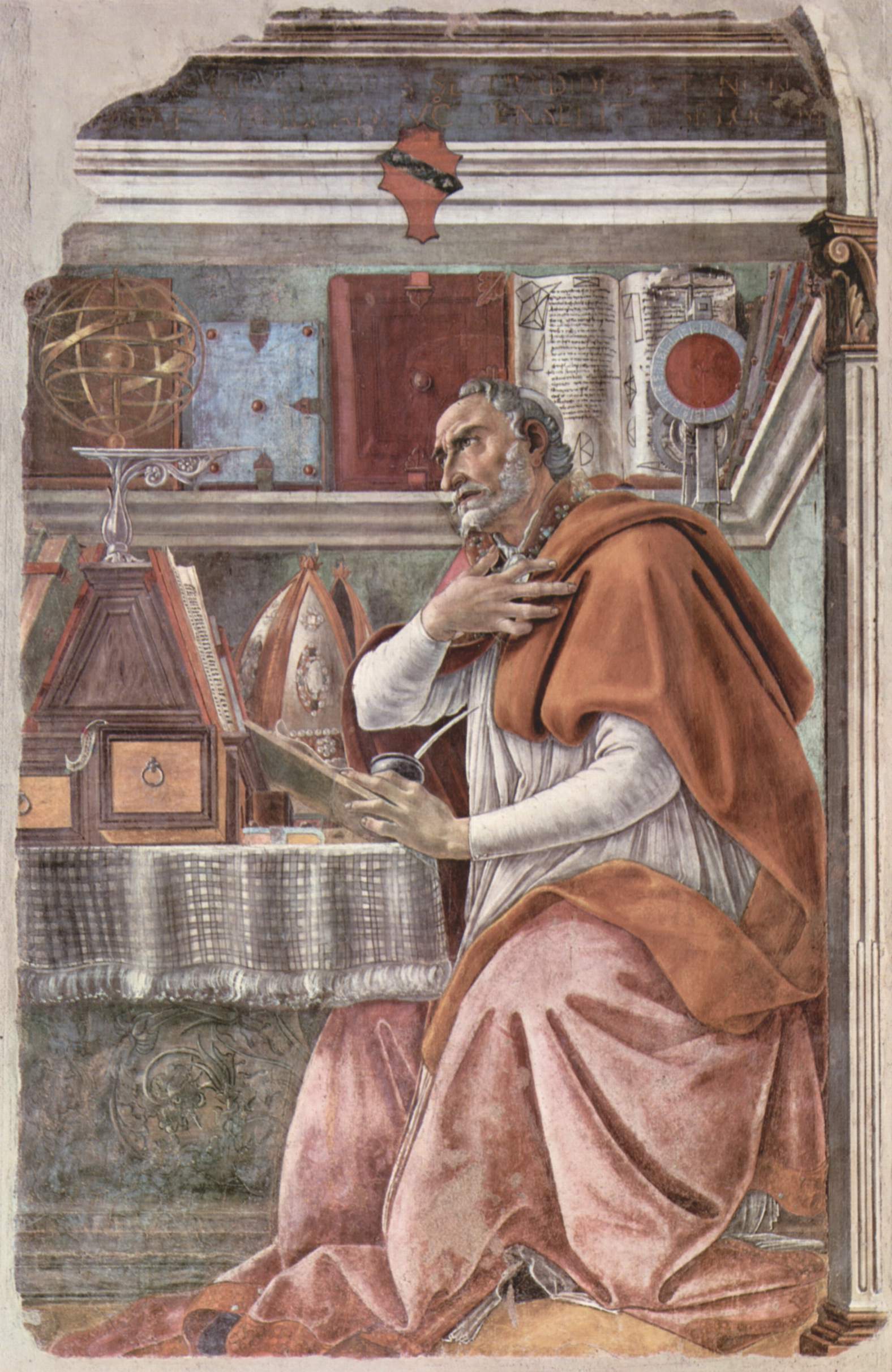 Not wanting to give short shrift to Saint Augustine on his feast day while lauding his saintly mom, Michael Joseph over at Vox Nova gives us a splendid primer on where to begin reading the great saint's works here.
Even if you don't plan to plunge into The Confessions, this is a post well worth your while.
Monday, August 20, 2007
Saturday, August 11, 2007
Friday, July 27, 2007
Watch, Laugh, and Learn
For those who missed them, and don't like to go into "Scroll Down Purgatory" as far as the Black Family Vault at Gringotts Goblin Bank, here is the website for the superb catechetical series, That Catholic Show.
Wednesday, July 11, 2007
Sowing Seeds of Faith

A beautiful necessity is the work of the laity in catechizing. Sherry Weddell writes ”In Praise of Catechists.”
Wednesday, June 20, 2007
Master Catechist - Pope B16 on St. Athanasius
 All too often we seem to blog away about choosing sides; like Christianity v. Islam or conservative v. liberal or atheist v. religious or corporate life v. farming (and on and on as we can't seem to define the "I" of each of us any other way except by the 'us v. them' scenario) and the sad reality is that very few of us in the pews this Sunday will have actually taken the time to study from any of the great catechists for the sole purpose of drawing ever nearer to God. I think that Amy Welborn has a great challenge for all of us, Catholic or otherwise, and that is to develop or get into a study using the soon to be available Apostles and her study guide coming out through OSV.

This is not to say that it isn't interesting to learn about the 'other side', however if called upon to defend the Church and The Word, just how much are you up on it to do that? It is one thing to know the 'other side' but it is another thing to have experienced the encounter of Christ and having your "I" expanded so to meet the 'other' and be on firm ground. Having just come from a Jeff Cavin and Tim Gray workshop on Acts of the Apostles (I'm that one toward the back right side next to the aisle) there is more and more options (meaning less and less excuses not) to get immersed in The Word. Are you up to doing that in a manner causing the least amount of scandal? When we model after the great catechists, who have drawn all their faith, hope, knowledge and love from the Living Word, rarely is one scandalized for the Truth sets one free. Read about St. Athanasius and St. Anthony and allow them to help you draw nearer to God.
From "ATHANASIUS: PASSIONATE THEOLOGIAN OF THE INCARNATE WORD" at Vatican Information Service reporting on Pope Benedict XVI's catechises this morning.
This saint's most famous work "is his treatise 'On the Incantation of the Word'," in which he affirms that the Word of God "was made man that we might be made God; and He manifested Himself by a body that we might receive the idea of the unseen Father; and He endured the insolence of men that we might inherit immortality."Here is a link to "Life of St. Anthony" by St. Athanasius that Pope Benedict XVI refers to in his catechises this morning.
Athanasius is also the author of meditations upon the Psalms and, above all, of one of the most popular works of ancient Christian literature, "the 'Life of St. Anthony,' the biography of St. Anthony Abbot which ... made a great contribution to the spread of monasticism in East and West."
The life of Athanasius, like that of St. Anthony, the Pope concluded, "shows us that 'those who draw near to God do not withdraw from men, but rather become truly close to them'."
Tip of the hat to Michael @ Annunciation
Subscribe to:
Posts (Atom)