Thursday, March 15, 2007

Lenny's Father ...

We can never pretend to gauge the love and mercy of God the Father. But, as Gil Bailie points out in this important post, the example of a father who practices his faith in attending Mass and living the faith and morals of the Church is of inestimable importance to passing on the faith to his children.

In the gargoylesque novel, The Dionysus Mandate, Lenny Schultheiss, AKA mort-rocker Doris Dahmer, has several flashbacks on his twisted path to redemption. This one (below) shows a sad estrangement between young Lenny and his distant, verbally abusive father.
A tall, gaunt man sat on a railroad tie. He stared down at the water between the ferries. Oil slicks undulated around bits of trash and debris. His waist-length black hair lifted lightly in the breeze. A voice from his childhood barked into his consciousness.

“Lenny, damn it! Get your hands out of that filth, boy!” His father’s voice growled at him from a distance of two decades. “Don’t you have a lick of sense?”
“I was just lookin’ at it, Dad.”
The gutter in front of their house often carried a mixture of water and chemicals from the rusting steel-mills of his hometown in Pennsylvania.
“How can you be so stupid, boy? I think I’ll start callin’ you Doris. How’s that sound, Doris? Doris? Doris?”
His father picked up the family cat rubbing against his trousers. Then he cuffed off Lenny’s winter hat for good measure. The boy bent over to pick up his cap and watched his father walk away. The man caressed the cat as he walked toward the house.
“You love that cat more than me!” Lenny shouted toward his father’s back. “I hate him,” he said to his playmate.
Lenny’s father dropped the cat on the front porch and entered the front door, wiping his feet. “Play good, Doris!” he called back at Lenny. “Hee hee hee.”
The boy rubbed tears on the sleeves of a plaid winter coat. His young face settled into a stony expression. He followed his father’s footsteps through the dirty snow and returned, carrying the cat.
“Here,” Lenny said. He threw the cat to his friend. He cupped his hands and lifted oily water to his lips.
“Gees, Lenny, don’t drink that!” his playmate said.
Lenny looked his friend in the eye. “Why not? You think my father would give a crap?”
“Well, he’ll probably beat the crap out of you if he sees you do it!”
Lenny looked down at the water in his hands, then toward the house. He drank it. He fought back a choking cough and smiled.
“Ah! Just like whiskey. Let’s go. Bring the cat.”
They walked around the house. Lenny led his friend to their secret hideout between decrepit garages.
“You ever kill a cat before, Billy?” Lenny asked.
“Come on! Please, Lenny! You’re not really going to, are you?”
“How many ways are there to skin a cat?” Lenny Schultheiss grinned and took the cat from his friend.

“Lenny, baby! Come on!” A young woman’s voice called him back to the present moment. “We have to go! They’re starting to load the ferry!”
The man tucked his long hair back up under a cap and stood up. I can bury you, Dad, but I can never get rid of you, can I?
The rôle of father and the task of fatherhood is a sublimely difficult one, especially today when "father" is synonymous with "dolt", "fool", and "know-nothing"; depicted as a Homer Simpson imbecile by prime time comedy writer stiffs.

The Massketeers are all fathers. We claim no special expertise, no extra dose of faith, hope, or charity. But where and when we are now, we lay before our children (where and when they are now) our witness to Catholic truth, the deposit of faith, and our fealty to the Church that Our Lord died and rose again to found. May our fatherhood and faith be filled and the difference made up by the grace and merits of the Son, the Word made flesh. Lord knows, we can't do it on our own.

Mediators - Distracted or Directed?

Here is another excerpt from Bailie's, Entering the Biblical Story at the Eucharistic Table. This time from the Q&A session of the talk where he elaborates on the relatedness of desire and suffering.

The Buddhist recognizes that the problem is desire that is very good, so do we Christians, or at least we should or we used to before we threw Augustine out. But for Christians it is not to shut down desire and it is not to avoid suffering. For Christians it is to awaken desire and turn it toward its proper object, turning it away from all the fancy glitter things that distract us, and toward God. And because we humans need to see the face of God, we absolutely needed the incarnation. Jesus gives us that incarnation so that our desires, and we are not talking about the goofy kinds of raw desires, but our longing, like metal filings can be re-oriented in the right way, so that our desire is awakened. This is what Dante is all about, awakening that desire and turning it to all kinds of mediators: Beatrice, the Beloved, Sister Immaculate, John of the Cross, whoever it is, awakened by all kinds of mediators and directed back to its true source. Augustine starts the Confessions with the first paragraph he ends it with, “We are restless until we rest in Thy.” We take that restlessness which is our desire, we don’t try to shut it down, we turn it toward its proper object and we understand that suffering can be redemptive. That is really powerful. When you recognize that this can be redemptive, not just for me, because if it is for me than it goes back to this little project of me getting into heaven, elbowing my way in. But my suffering can be redemptive to somebody on the other side of the planet – to somebody in another age. And this is what prayer can do. We have to believe these things because they are true. We use to have, as little Catholic children in the playground, prayers or we would offer up our suffering to the poor souls in purgatory, which now today everyone has a little condescending smirk, but it is absolutely true. Our suffering can be redemptive not just for us, but maybe not primarily for us, but for others. It is a great gift and once you recognize that, suddenly this pain has dignity and vocation.

Over the course of my faith journey I became aware of just how undeveloped my passion or desire was - lukewarm at best. My mediators were your usual actors, business types or sports heros, whose image or essense was manufactured and not real. To wake me up from this stupor, setting me on fire for life, took repeated smacking of a 2X4 against my forehead (divorce and stroke) until no longer did I continue to try to find fulfillment gazing upon manufactured idols. I can look back now and notice numerous mediators coming into my life directing me to Christ; and the more I gazed into their eyes the more my desire and passion grew and (what seemed like) suddenly I burst into a love for the church - being a member of the body of Christ became my passion.

So not only are mediators important, helping one to be directed and not distracted, but by being directed toward our true source we become aflame with the Holy Spirit - true Christ-links in the world.

Wednesday, March 14, 2007

The Meaning of the Mass 3of3

Archbishop Fulton Sheen finishes up his 3 part series on The Mass with these words, We live by what we slay.

The Sacrifice, a Eucharistic or Dionysus Mandate?

Athos mentioned the absolutely great tape made by Gil Bailie, "Entering the Biblical Story at the Eucharistic Table." Here is an excerpt from the conclusion of that talk. I think it stands as a relief to the wonderful glimpse we are getting from Athos' book, Dionysus Mandate.

Then there is a little passage of a book on Revelation by William Riley, Irish Biblical scholar who passed away a few years ago that I would like to leave you with. He has a wonderful way of helping understand our work in the church and it also comes out of our Eucharistic Mandate. He says that Christ often calls us to failure, not success just as He Himself was called to the Cross. “The marvelous religion teacher, the hard working bishop who manages his diocese well, the mother of a family strongly rooted in the faith have done no more works than the dedicated religion teacher whose classroom is like a drudgery, or the zealous and caring bishop whose administration is constantly criticized or the loving mother whose family, despite her efforts, have all abandoned the Church. In many ways the last three have received a higher calling.” Isn’t that amazing? We are called to move into that place of brokenness and to take up our cross. And to do it in such a way that the world hears the cock crow, and that the world feels the forgiveness of God. And that the world recognizes that we are not doing it on our own, or that we are not doing it because we are nice, or morally superior. We are doing it because Christ has laid His Hand on us.

A side comment: In the quote above, he tells of the calling one receives. Well this implies that one is open and receptive to receiving the call. I look at all the distractions in our world, many of which go to the extreme, and realize just how hard it is for anyone today to hear their calling -- resulting in what Athos has coined, Distracted to Death... So even if one does go to Mass, without the extreme surrendering, or death of 'self', at the Mass, one will likely leave the service unprotected - clinging to the false sense of 'self' - venturing into distractions of death.

Tuesday, March 13, 2007

Sheen - Meaning of the Mass +


Archbishop Fulton Sheen may summarily answer a few questions that were raised by Aramis in his post, I Must Remember that I Can Only Invite - The Lord Does the Rest.

This is the second of three clips of Archbishop speaking of the Mass on You Tube, but for me, the most powerful.

Monday, March 12, 2007

I Must Remember that I Can Only Invite - The Lord Does the Rest


In commenting on Athos' post I used a quote from Yeats, who penned "The best lack all convictions, while the worst/Are full of passionate intensity." I asked in the comment how we can rev-up our lives. Well it didn’t take long to find an answer as I came across this post from Welborn’s open book.

The message starts off with, How can we communicate the joy of Catholic worship and I would make sure we see in the word, 'joy' a sense of passionate intensity - and I hope that all see in the concept of 'Catholic worship' the Eucharist – the sacrifice and the body and blood of Our Lord.

Father Dwight Longenecker continues:

To the outsider I know this seems arcane, irrelevant and difficult to understand. To many Catholics it seems the same. They wonder why worship cannot be more 'relevant' and more easy to understand. Perhaps they wonder why the worship cannot be more joyful, more upbeat and more 'with it'. I cannot explain.

I cannot explain in the way I cannot explain a Mozart aria, a Beethoven quartet or a Raphael Madonna. I cannot explain the lift and surge of liturgy as I cannot explain the heft of a poem or the fullness of the silence in the rest of music. I cannot explain the transcendence of beauty,the knowledge of eternity electric in the frail physical things. I cannot explain the connection with the infinite in the interstices of the psalms, the intimacy of goodness in the rapt face of a child in worship, the contact with reality in the smoke of incense, the deep rumble of the organ, the delicate dance of light or the poignant harmony of plainsong. I cannot explain the certainty of sanctity known in the wrinkled hands of an old woman in prayer, or the certainty of grace in a teenaged boy kneeling in silence--a smile of joy impressed upon his face as if by an unseen power.

I cannot explain any of these things, but I can invite you to the feast.

Sunday, March 11, 2007

Making A Deal with Death

The politician, standing before the mob, however genteel, however august the surroundings, tells it what it wants to hear. This devise is manifestly exposed in the canonical New Testament; the power instrument of all who want to lay claim to superiority in their field of expertise. That it happens in the halls of Congress carries no excuse:
Standing before the Senate chambers of the United States Congress, Senator J. C. Holmes paused to adjust his glasses. His owl-like eyes seemed enormous behind the thick lenses. Congress with dignitaries from various foreign allies and the President waited for him to continue...

“And I say to you, my fellow Amarcans, the passage of this historic Bill is a triumph for democracy! Never since the birth of civilization has such progress been made for mankind. Today is the dawn of a new era: the rebirth of order and civilization from the ashes and destruction of the old. Therefore, to symbolize the unprecedented unity between peace-lovin’ nations around the world, bonfires of the purest natural gas shall burn and be maintained at our nation’s monuments here in Washington beginning Midsummer’s Eve. Such lights blazed in the Parthenon of Athens and the Pantheon of Rome – our forbears of democracy and the power of the will. And, my fellow Amarcans, we are lightin’ the torch of order and grandeur once again!”

Members of Congress on both sides of the aisle rose to their feet. The Vice President, seated behind the respected senator, nodded her head and applauded with the rest. The president and his wife smiled and whispered to the Nobel laureates on either side. The hallowed chambers quieted as the Senator at the podium began speaking again.

“And I say – and I say – let anyone who tries to stand in the way of the Dionysus Mandate, beware! The will of the world’s people has been heard! The will of the people and the will of the Almighty are one! We shall never be defeated by terrorists again!”
With this, the senator from North Carolina gives the stamp of approval to the Dionysus Mandate, mythologizing it into Satan's jurisdiction: that of state, pomp, and prestige.

The Dionysus Mandate.

The Chaplet of Divine Mercy


I feel moved to take it up. Can Massketeers advise?

If one does the daily rosary, and substitutes a Divine Mercy Chaplet on some days, is that still considered a rosary, or a Divine Mercy Chaplet that just happens to use rosary beads?

Saturday, March 10, 2007

Chekhov's Gun

Athos here:

My brother-in-arms, Aramis, asked me to provide a guided tour of The Dionysus Mandate, a novel I was driven to publish after being hounded ruthlessly by its insistence that I do so for about three years. The excerpts I share are from it and, I fear, won't make too much sense out of context. But feel free to get out your credit card and purchase a copy from Amazon and/or Barnes&Noble.com in order to accrue a truer picture of what the novel is about.
They walked the length of the building. The smell of machinist oil pleasantly filled the facility, a well-equipped tool and die shop and high tech laboratory. At the end of the deserted building, they walked between two ceiling-high baffles. The ambiance became surprisingly dark and dim in this partitioned area. The three men stood still, adjusting to the lower light.

Before them stood a device of great size and solemn craftsmanship. Its engineered superstructure, air-table, hydraulics, threaded tracks, and blades glinted. Studio-quality camera equipment, infrared sensors, and medical monitors were also incorporated onto the apparatus.

“So, what do you think, Lucent, my friend? Will the directors be pleased with the Dionysus Mechanism?” Helmut Praetorius asked ... The mechanism lay beside them like some slumbering beast of prey in a sacred grove.
Anton Chekhov is purported to have said, "If in the first act you have hung a pistol on the wall, then in the following one it should be fired. Otherwise don't put it there." In this excerpt, we are introduced to the Dionysus Mechanism. It is an instrument designed by the World Consortium for World Peace for one purpose: to execute the world's most heinous criminal before a world-wide television audience in the most painful, clinical, and economical method possible. It is a violence reduction mechanism.

Anyone at all familiar with the work of René Girard in the area of cultural anthropology knows that at the heart of his complex and multifaceted opus is the idea that the human race universally utilized violence, paradoxically, to bring about peace, harmony, culture, and religion through the "single victim mechanism." This was not planned, of course, but came about when people found themselves prior to the origin of culture in what Thomas Hobbs coined as the "war of all against all." Unlike other social animals up to and including the higher primates, humans weren't imbued with a dominance/submission instinct. So, when one hand reached for an object of desire, be it a luscious potential mate or a luscious piece of fruit, that gesture was mimicked contagiously. And, in Girard's way of thinking, the multiplication of this acquisitive gesture soon brought what little social cohesion there was to the brink of disaster.

Something not only saved the day, but something did much, much more. This acquisitive gesture mimetically (contagiously) and unconsciously "caught" was replaced by a gesture of even greater mimetic power: the accusatory gesture. Looking around at the madness of desire run amok for the object of desire, someone arbitrarily chose another and pointed his or her finger at that person. "This is all his fault!" was the message of the pointing finger. The accusation was replicated with lightning speed. In Girard's words, the scene became "unanimity minus one."

The designated one became either expelled and exiled or, more likely, the victim of deadly force. And where once there was disorder, madness, and chaos there now lay a dead culprit and an aroused populace happy that he is gone and we can be about our businesses unmolested by such a heinous monster.

The Church and her Sacred Scripture, Tradition, and Magisterium have worked a long time on the mind of westerners teaching that the old woman at the edge of town is not really a witch, the Jew didn't really poison the well or eat Christian babies, and the demoniac living among the tombs needs rescuing not stoning.

So, in the words of the technician who showed Helmut Praetorius and Lucent Neesam around the Dionysus Mechanism, “Who the hell needs a technologically advanced guillotine anyway?”

Perhaps those who think the human race needs to return to the origin of human culture(s) to quell the rampaging violence we see in our world today. It would do us well to remember to whom mere cultures and kingdoms belong.
"...the devil took him to a very high mountain, and showed him all the kingdoms of the world in their magnificence, and he said to him, "All these I shall give to you, if you will prostrate yourself and worship me" [Mtt 4,8-9]

Denuding Dawkins

Our friend Gil Bailie tries to work up the heart to address Richard Dawkins' The God Delusion here.

Alvin Plantinga reviews/womps the philosophical argument (such as it is) here. (Hat tip: Amy Welborn)

However, one of the better take-downs has been by the secularist/Marxist Terry Eagleton here. (Hat tip: Dreadnought)

I've read loads of Dawkins and Dennett, but consider that period of my life over and that topical area pretty much exhausted. I've read it all before, from both, and there seems to be nothing new here except a reconfigured and redeployed snarl. I think I can safely give this one a miss!

Friday, March 09, 2007

Hanger 84


THIS is hanger 84 were the aliens, back in July 1947, were kept awaiting transport out of Roswell to a secret military installation for study.

You guys with your kilts, Scottish dancing to Silly Wizard fiddle playing on one hand and Dejohnette soothing jazz and Mahler’s big orchestras on the other. My meager beginnings were situated around Hanger 84. Go figure.

2 aliens, one just visiting, the other looking for a home.

Peace
Aramis
A disclaimer - I'm the one in yellow.

And if you want a tour of Roswell here is a nice little site that you can link to see all the hot spots in the area.

Thursday, March 08, 2007

Scottish Soul

Scouring You Tube for a performance by my favorite Scottish band, Silly Wizard, one is not to be found. But, one can have a good listen to their "Queen of Argyll" as accompaniment to an obscure television offering called "SGA - Grace" (if this is NOT obscure to you, you now know how little I watch commercial television). This is Scottish soul.

By the way, the brothers Cunningham, Phil and Johnny, produced many works. Phil worked with another angelic Scottish singer, Connie Dover, on several albums. Johnny, the finest, wildest (red-booted and boozy when I saw him perform) Scottish fiddler I ever heard, before his sad and untimely death, co-produced for my money the finest Christmas album, The Soul of Christmas (disregard that Thomas Moore has a concomitant CD with it; throw it away and keep the music CD of Cunningham's).

And remember, lads and lassies, a pennywecht o love is worth a pund o law. Read about Silly Wizard here.

Wednesday, March 07, 2007

"Love Ship"

Not the Love Boat.

This one's for jazz fans.

I guess the 60s weren't all bad, but who was listening to this great stuff in 68?

Charles Lloyd (sax)
Keith Jarrett (piano)
Jack Dejohnette (drums)
?? maybe Dave Holland on bass

Tuesday, March 06, 2007

What AM I Looking At?


Since Aramis and I are wending our way through Hell with Dante and Virgil via Gil Bailie's taped lecture commentary series, we see here the work of probably the most celebrated illustrator of The Divine Comedy, Gustav Doré.

The most popular and successful French book illustrator of the mid 19th century. Doré became very widely known for his illustrations to such books as Dante's Inferno (1861), Don Quixote (1862), and the Bible (1866), and he helped to give European currency to the illustrated book of large . He was so prolific that at one time he employed more than forty blockcutters. His work is characterized by a rather naïve but highly spirited love of the grotesque and represents a commercialization of the Romantic taste for the bizarre. Drawings of London done in 1869-71 were more sober studies of the poorer quarters of the city and captured the attention of van Gogh. In the 1870s he also took up painting (doing some large and ambitions religious works) and sculpture (the monument to the dramatist and novelist Alexander Dumas in the Place Malesherbes in Paris, erected in 1883, is his work).

Dreadnought and James Alison: Duel of Titans

A somewhat inevitable head-to-head has commenced, between Dreadnought and James Alison, and it is worth checking out. I hope to add more in the comment boxes about how both men have influenced me (positively). But at any rate, theirs is indeed the beginning of an important discussion--important to how "Girardianism" is defined, and what place Girard's thought occupies in theology and moral teaching. A crucial discussion. Let us hope and pray for more light than heat here.

Sunday, March 04, 2007

Men for Christ & Family


In my daily interaction with young people in a Catholic school setting, I see how permeable are its walls to the pop culture of North America. Graham Greene once said that faith had been replaced in England and America with "ugly indifference," and North American culture "wasn't evil, it wasn't anything at all, it was just the drugstore and the Coca Cola, the hamburger, the sinless graceless chromium world" [Lawless Roads, 14-15]. That is a pretty big problem to try to bring down, and, not having an elephant gun of sufficiently large calibre, I won't try.

But I do think, however, that the Three Massketeers, being male and living, moving, and having our being in the lenten lands of postmodernism, we have something to say about being Catholic men of faith and raising boys and sons to become Catholic men of faith.

I see rootless boys in my school's setting who have no father to model for them what it means to be a faithful, Catholic father in the "domestic church" or in a society that belittles manhood. I see how the Church and, under her eucharistic wings, the Catholic school, tries to help boys take up the responsibilities of becoming a faithful Catholic man. It is, at best, remedial. To be a trustworthy mentor-figure for such boys is an honor for me. But they are bombarded day in and day out with the values of pop culture; the classroom for many such boys -- and girls too -- is seen by them as a necessary evil on the way to the rest of their lives at best and anachronistic, bothersome, and a scandal at worst.

In my opinion, this is because of fatherlessness. They have no father to whom they can turn as a living, breathing bearer of the promises of the Church's teachings, Catholic fatherhood in the flesh. Even if dad is on-site in the family, quality time spent in his presence is minimal, haphazard, and fleeting. Moments when father is truly present to a son are precious and few. How can sons learn from fathers in such a skewed and decidedly unfamily-friendly milieu?

Dr. Philip Mango, Catholic psychotherapist, analyzes the disease and possible solutions here. He sees four "archetypes" placed in men by God that help pass the holy tradition of manhood and fatherhood from one generation to another: the king, creator of order in family, Church, and society, the warrior, who defends and protects the weaker and fights for the honor of God without fear or hatred, the lover, who is not sentimental but quick to forgive, is uncontrolling, and faithful, and the wise guide, who able to convey spiritual knowledge and forsakes false advice, half-truths, and evil.

Dr. Mango encourages men to reject a "hectic, driven, agitated existence" and practice servant-leadership and self-sacrificial love, in loving God and serving family above all else.
Interested readers can visit his website at www.saintmichael.net.

Saturday, March 03, 2007

Martyr Time Draws Near?

Courage Man has an important post regarding postmodern martyrdom. He sees it coming soon in Britain and in the near future in the U. S. Amy Welborn sums it up in her ”Through the Looking Glass” post.

All the while, structurally speaking, the Generative Mimetic Scapegoating Mechanism (Hamerton-Kelly) gets more victims. It's The Wicker Man (1973 - the good one) all over again, only in real time. Welcome to the true 1984.

Consensus: Saint Edmund Campion, pray for us. +

Friday, March 02, 2007

Iowahawk's Three Eco-Spiritual Laws

If they consider it over the top, my Massketeer companions are free to delete this post. I merely draw attention to a recent effort by the funniest man on the Internet.

Scottish Country Dancing

It must be my Scottish blood ('Campbell' on my mother's side), but my ethnic spirit rises when I hear the music and see the dancin' from the wee glens and lochs. And seeing these exceptionally modern-looking teens dance a reel does the heart of this 1/2 centurian (plus change) much good.
They are the native Fifers of Bell Baxter High School, Cupar, Scotland. Enjoy, but be careful: it may cause you to kick up your heels too, ye lads and lassies.

Thursday, March 01, 2007

Catholic Hollywood Film Showcase


Speaking of Hollywood films...

Aramis' good buddy, film maker Gerard Straub founder of the The San Damiano Foundation will be presenting a compilation of segments from his numerous films on Franciscan poverty and prayer during the premiere of the Catholic Hollywood Film Showcase. See the Press Release below for more details.

Interestingly enough, I read yesterday from Amy Welborn's Open Book Gone Hollywood page that The Catholic Reporter ran a story on David J. Hartline's new book, The Tide Is Turning Toward Catholicism and in it he talks about where there are cracks in the glamour, glitz and garbage of Hollywood films the light is starting to break in.

Press Release

Catholic Hollywood Film Showcase

The Los Angeles Religious Education Congress announces the premiere of the Catholic Hollywood Film Showcase on the evenings of March 2 and 3. For the first time at the L.A. Congress, films and documentaries from the Hollywood Catholic community will be shown during this annual gathering of over 30,000 Catholics from around the world.

The Film Showcase will screen films and documentaries from Catholic production companies from Hollywood. Seven companies have submitted films to be shown: Pluma Productions, Loyola Productions, Family Theater Productions, Paulist Productions, Mud Puddle Films, Hope Media Productions and the San Damiano Foundation. An animated short entitled, The Very First Noel, will also be shown. A special feature will be a short film that screened in Cologne at the 2005 World Youth Day, Inigo Film Festival which was the inspiration for this showcase.
There is a large Catholic film community in Hollywood that influences and produces religious, spiritual, and social justice themed videos, documentaries, and films. This is a little known community that is growing in impact and influence. Catholic networking and prayer organizations include Catholics in Media Associates, Open Call, and the Catholic Communicators of Southern California.

The Showcase is on March 2 and 3rd, from 8-10:30PM, in Anaheim Hilton Hotel’s Pacific Room A. Producers and directors of the films will be on hand after the screening to answer questions and discuss their work.

The producers for this Showcase are Fr. Ron Schmidt, S.J. and John Flaherty.

For additional information contact Fr. Schmidt at reschmidt@hotmail.com.


You can access information on the Catholic Hollywood Film Showcase by linking here and then click on "Download the Program Book" and scroll down to page 6. You will find a brief description of the showcase and further down the page is the info on Gerry Straub's photo exhibition.

Great Moments in Massketeer History


Feb. 26, 2007
Anchoress drops by to make a comment at my post on Fr. Phil's homily. As when Elizabeth Taylor visited James Dean in Giant, romance is quite out of the question. Nevertheless, the screen chemistry sizzles.

Wednesday, February 28, 2007

The Summit of the Christian Mystery


Once again, Monsignor Luigi Guissani, founder of Communion and Liberation, astounds with his insights in the last meditation of this month's Magnificat. He points the way for the converted self -- an ongoing topic here at the Three Massketeers -- via the greatest faith claim of the Catholic faith: Jesus' Resurrection.

It seems a bit out of place in the first week of Lent, but perhaps he is echoing St Augustine's notion: "From now on, regard this life as a desert through which you pass until you come to the Promised Land, the Jerusalem which is above, the land of the living."

It is not without significance to do just that at this time; after all, our friend Gil Bailie only recently bade farewell to his good lady, Elizabeth. It is equally significant that we make our Lenten pilgrimage in a dry and weary landscape only by keeping our eyes fixed on the horizon of faith, hope, and charity, the theological virtues that come only by the grace of God. Guissani:
In the Mystery of the Resurrection lies the summit and the highest intensity of our Christian self-awareness, and therefore that of my new awareness of myself, of the way in which I look at all people and all things ...

Without Christ's Resurrection there is only one alternative: nothingness. We never think of this, and so we pass our days in that spinelessness, that pettiness, in that thoughtlessness, in that dull instincitivity, that repugnant distraction in which the "I" is dissolved.

And so when we say "I", we say it in order to affirm a thought of our own, a measure that is our own (also called "conscience"), or an instinct of our own,, a desire to possess, an arrogant, illusory possession. Were it not for Christ's Resurrection, all would be illusion, a game.
Compare the breathtaking truth of Monsignor Giussani to the banal slander of the James Camerons, James Tabors, and others who would have Christians doubt the fact of Jesus' Resurrection. Christians do not doubt the facts of life and death, any more than the most hard-hearted atheist. We simply say that our hope transcends time.
"In sorrow we must go, but not in despair. Behold! we are not bound for ever to the circles of the world, and beyond them is more than memory."
These are the last words of Aragorn, King Elessar, to his beloved, Queen Arwen, put there by J. R. R. Tolkien. And it is our good fortune to keep our hearts fixed by "faith in the Maker of all things, and in the love he has placed within the human heart" (S. Caldecott).

Go into the desert of Lent with a light heart, says Monsignor Giussani. The way has already be cleared by the Word made flesh. +

Work - Our Holy Model/'External Mediator'

Just a reminder when the grindstone seems a bit harsh on the nose.

Complete Barnett Interviews

The last Hugh Hewitt interview with Thomas P. M. Barnett is up, so I thought I'd update an earlier post by putting them all up here. I think Barnett's vision is fairly non-partisan, and that these are excellent primers on global connectivity with a rather non-America-centric perspective. Each interview is about 35 minutes.

Session 1
Session 2
Session 3
Session 4
Session 5
Session 6
Session 7
Session 8

Hat tip: GA Blog, which linked to the first six of these

Tuesday, February 27, 2007

Other Lenten Treasures

include this lovely post by Anchoress and the "40 Days, 40 Graces" series running over at Suicide of the West.

"Hot Sand of Deprivation"


There was such a great picture up at EWTN (above), and it fit so well with Fr. Phil's homily, posted previously, that I thought I ought to capture the picture before it disappears . . .

"Lent is not about avoiding temptation. Lent is about walking the hot sand of deprivation so that what tempts you worms its way to the surface. Discomforted, what tempts you selfishly proclaims its own praise, shouts it own name. Not yours. And then you know the truth: you are not your sin; you aren’t even the sum total of all your sins! Yes, you’ve fallen, given in, even welcomed Rebellion and Disobedience into your life. Praise God then that Lent is about clearing the wreck of your worldly life so that He Who moves you at your core, rises, speaks His name with authority, claims your soul, and makes your life among the things of this world a tireless prayer, a breathless hymn, and an inexhaustible fiat! This is more than a mere reminder of who’s in charge of your Christian life; it is a renewal of the bond of affection between Father and child, the rediscovery of an unshakable peace and infallible grace."
Fr. Philip N. Powell, OP


PS Can you tell a lot about a person from his or her Amazon wish list? Here is Fr. Phil's.

Monday, February 26, 2007

Wow

This Lenten reflection is seriously good. Also on podcast. Who is this guy?

You watched the desert, expecting this Lenten trek and you wanted…you wanted…something. Someone? What? Think back! Go back and see it! Ash Wednesday is like a barge on the church calendar, plowing through ordinary time to arrive like a liturgical bully at the dock of the altar. No sweet hymns. No decorative treats or cute secular totems. Just ash and a reminder: you are made from ash and to ash you will return. From dust to dust. At that moment, with that memory: what did you want? Now, what do you want? You need to know this. The desert knows. I mean, the time you spend these next 35 days or so wandering the desert of the spiritual life, what you most desire, that which we need most will come to you. And not necessarily in a form or fashion that you will recognize. Lent is not about avoiding temptations. Lent is not about fasting or prayer or being good. Lent is about wandering into the emptiness, the vanity, the wreckage we have made of our spiritual lives and finding one more time the stalwart presence of God, the inexhaustible workings of the Holy Spirit. Seeking and finding the face of Christ.

These forty days are a countdown for detachment, for unplugging. Lent is a time for us to detach from all the teats of our poisoned culture and to stop sucking at the breasts of market-tested nihilism and brand-name conformity; to stop the sewer-flood of Hollywood-funded debauchery and sadism into our homes; to speak the gospel Truth to the dark powers of “might makes right” moralities; to witness against the suicidal, all-you-can-eat buffet of liberal religious candy our children are fed daily...even in our Catholic schools. Lent is a time for you to remove your lips from the honeyed breasts of genetic science and its Faustian promise of near-immortality. You will live forever but not by murdering a child; you can be beautiful forever but not at the price of harvesting our children like melons.

Lent is a time for you to calculate with cold reason and a clean heart your commitments in this world. Where are you bound? To whom do you owe your money, your livelihood, your dignity…your soul? Who owns you? What ideas possess your mind? What passions fuel your heart? What images cloud your vision? What do you worry about and why? Here’s the question with which to examine your conscience before confession: exactly how would anyone know Jesus owns me body and soul?

Know the answers! You must. Because the desert knows and the desert will tell. The desert will tell the Devil and he will color in those drab images, season those dull fumes, stoke the fires of weak passion. He’ll parade your desires, sharpened and concentrated, parade them before you, lying to you, pampering you, telling you how much you deserve what you cannot possibly need and only vaguely want. When those ashes were traced on your forehead…at that moment, what did you want? Mercy? Forgiveness? Love? To be seen as pious? You will find it in the Lenten desert. But will your desires look like gifts among all that scarcity?

Pay careful attention to the gospel. Jesus went into the desert to pray, right? No. He went into the desert to fast, right? No. He went into the desert to start his new diet? No. Of course, he prayed and fasted. But he didn’t go into the desert to do those things. Rather he “was led by the Spirit into the desert for forty days to be tempted by the devil.” He went to the desert so that he could be tempted. The devil tempted him with food, power, and worship. Jesus refuses each in turn. He quotes scripture and dismisses each temptation as a mere shadow of what His Father offers. The devil offers Jesus illusion, impermanence. And he will offer you the same. And you will accept his offer unless you understand with near perfect clarity and will what you want, what you desire as a faithful follower of Christ.

Lent is not about avoiding temptation. Lent is about walking the hot sand of deprivation so that what tempts you worms its way to the surface. Discomforted, what tempts you selfishly proclaims its own praise, shouts it own name. Not yours. And then you know the truth: you are not your sin; you aren’t even the sum total of all your sins! Yes, you’ve fallen, given in, even welcomed Rebellion and Disobedience into your life. Praise God then that Lent is about clearing the wreck of your worldly life so that He Who moves you at your core, rises, speaks His name with authority, claims your soul, and makes your life among the things of this world a tireless prayer, a breathless hymn, and an inexhaustible fiat! This is more than a mere reminder of who’s in charge of your Christian life; it is a renewal of the bond of affection between Father and child, the rediscovery of an unshakable peace and infallible grace.


Generous hat tip to Amy Welborn

Sunday, February 25, 2007

'Tis the Season for Debunking ... Sigh

Hold onto your hat. We have entered the season of Lent ... It must time for the Christianity debunkers to come out of the woodwork! This time, James Cameron (Terminator, Titanic, Aliens of the Deep) and pulp documentary maker, Simcha Jacobovic (Quest for the Lost Tribes) are about to unveil their new project.

At a press conference on Monday, February 26th, they will reveal three ossuaries purported to be those of Jesus and his relatives. DNA samples will show conclusively the family ties, the tissue remains proved by carbon-13 testing to be precisely mid-first century, and the names on said ossuaries are authentic, not latter-day fakes.

Most if not all their "research" comes from James Tabor, chairman of religious studies at the University of North Carolina, Charlotte, and author of The Jesus Dynasty.

The presuppositions employed by Tabor, Cameron, Jacobovic, and all materialists interested in sinking the Catholic Church, her creeds and faith, the divinity of Jesus Christ, and all who rely on the Christian faith are the usual suspects: no God, no miracles, nothing beyond the reach of the empirical method of scientific research, and no hope of help from beyond our meager human existences in a vast, cold, dark, and largely empty universe.

Grabbing at what archaeologists tell us were hugely commonplace and popular names in the first century (Joseph, James, Jeshua, Mary, et al), Tabor in particular makes enormous leaps of faith himself in postulating his argument that these were the graves and remains of Jesus, "his wife," and other family members. It IS more interesting than "The DaVinci Code" in my book, because of the locale, the archaeological work, and the themes. But the logical presuppositions of Prof. Tabor sink this titanic spoof -- they just won't hold water.

So, viewers of the upcoming documentary "The Burial Cave of Jesus" will enjoy the idea that we can have a good laugh at the believing dunderheads and kiss two thousand years of Christian faith goodbye once and for all. But those "dunderheads" -- I count myself among them -- will recall that when Saint Helena came to Jerusalem, Bishop Makarius knew precisely where the tomb of Our Lord was, over which the Church of the Holy Sepulcre stands to this day.

The Church, her bishops, and her people had never left Jerusalem where Jesus said to the apostles after his resurrection,
Why are you troubled, and why do questionings rise in your hearts? See my hands and my feet, that it is I myself; handle me, and see; for a spirit has not flesh and bones as you see that I have. [Lk 24, 38b-40]
A blessed and faith-filled Lent. +

Saturday, February 24, 2007

CONVERSION or else ... what will happen to us?

In concluding “Let This Mind Be in You” tape series on conversion, Gil Bailie admits that in his attempt to weave together all the themes of the earlier sessions he had to leave out 3 pages of connecting-the-dots. I must admit that I would have liked to have had those pages. With the help of the groundbreaking work of Rene Girard, Gil tries to bring clarity to this radical understanding of culture and the person as both are being deconstructed under the weight of the Gospels. Even the thought of this task is not an easy thing to get your arms around.

Some of the major dots used by Gil in the final tape on conversion are:

Friedrich Nietzsche
The Underground Man – Fyodor Dostoyevsky
Reveries of The Solitary Walker – Jean-Jacques Rousseau


Meister Eckhart
Johann Baptist Metz
Jean-Michel Oughourlian

Scriptures
The Church
Communion of Saints

Curing possession with possession
Manic depression
Conversion

St. Paul
Blessed Mother Mary
Jesus Christ

I love this series on conversion and each time I revisit it I glean something more. But there is so much to absorb that I could still use more help in connecting the dots. I have tried over and over to find closure on these posts regarding this tape series and frankly I am at a loss. I can only fall to the ground (with the Poor Clares or St. Thérèse) and pray with Mary; Lord, not my will be done, but Your Will be done.
Ecce Ancilla Domini - Dante Gabriel Rossetti

For other posts that the 3 Massketeers have made on Gil Bailie's tape series, Let This Mind be in You follow the links below:
Athos posts here
Athos notes here
Athos notes on tape 9B link here
Aramis notes on tape 5 here
Aramis notes on tape 4 here
Aramis notes on tape 3 here
Aramis notes on tape 2 here
and you can see our first post regarding this tape series by clicking here

Larger Erections Now!

The mythologist Joseph Campbell once said that the size of a culture's buildings speak to its values. In the Middle Ages, the cathedrals of Europe stood like mother hens surrounded by their chicks.

Did 9/11 put the kibosh on men's lust for height? Vivify a newer, humbler post-skyscraper era? No way. Frank Lloyd Wright's dream of a mile-high skyscraper is being built: the Burj Dubai.

Welcome to Babel redux: burj means "tower" in Arabic. Will we see such economic loss-leaders again in America's urban centers? Phillip Nobel, author of the New American article, says no. Once they bespoke invincible optimism, abundant in the past now reined in by local ground rules. But this spirit is alive and well in the Middle East and Asia. Such buildings make money, but they also awe.

Just a question: Is it good news or bad news that such chutzpah has packed up, left the U. S. A., and moved to the sandy realm of Dubai?

Friday, February 23, 2007

Bernstein M8

OK, look, maybe this is not everybody's bag, but this is great stuff. Bernstein doing Part I of Mahler's 8th. Unfortunately, these are not continuous or complete clips, just excerpts. Additional unfortunateness: I tried to do a YouTube embed on this but got stymied at one step of the process.

Part 1 of Mahler's 8th is the "Veni, Creator" put to music.

Excerpt 1

Excerpt 2

As an added bonus, same performance, the very end (the "Chorus Mysticus," which has been linked ad nauseum by me before):

Excerpt 3

Extra super special bonus: an excerpt from a documentary on Bernstein, Mahler and the Vienna Symphony.
Excerpt 4

Thursday, February 22, 2007

Leo on Lent

Pope Saint Leo the Great -- great for among other things facing down Attila the Hun -- gives a short but powerful homily on the observance of the season of Lent here.

God's peace and mercy to Gil Bailie today, February 22, 2007, the day of his beloved wife's funeral. +

Tuesday, February 20, 2007

A Servant Called Home

No words can express our deep sorrow with the passing of Liz Bailie.
We lift up our dear friend Gil, praying for strength and guidance in this time of loss. On bended knee and clasped hands we send our love to you. May His Peace forever surround and protect you.

Monday, February 19, 2007

GodSpy Interview with William T. Cavanaugh

posted by Porthos

Going out on a limb, I'm guessing that the Massketeers might endorse this fellowand that even Porthos can be brought round on that. I'm sorry if this has already been linked and I missed it earlier.

Yummy, crunchy, conserberalist goodness!

You've made the argument that the Eucharist is an answer to globalization. What do you mean?

I want to be cautious about saying the Eucharist is the answer to anything. It's not magic. But it is central to a Christian way of seeing and acting. That's what I'm talking about.

In the Eucharist the global is realized in the local. Each congregation that meets has the whole Body of Christ present. It's a different way of talking about the relationship between the global and the local that doesn't have the same implications as the total dominance of the global over the local.

The other point is that the imagination of the Eucharist tends to resist the imagination of the detached consumer. This is because the Eucharist consumes us, it makes us part of the Body of Christ and takes us up into Christ. Since we know that we're members of the one Body of Christ, we can resist this idea that we're just detached individual consumers who survey the world and choose whatever we like. Now that we're a member of the Body, as Saint Paul says, the pain of one of the members is our pain as well, the pain of all.

This also would seem to imply mutual responsibility, that we really are our "brother's keeper."

Yes, exactly. It resists individualism.

When we talk about our free-market culture�, we're assuming a certain understanding of freedom. What kind of freedom is presumed and promoted in our free-market culture and where is it leading us?

The classic philosophical distinction between positive and negative freedom is that negative freedom is freedom from interference and positive freedom is the ability to do something. The kind of freedom you get in the so-called free market is not the freedom to flourish as human beings. It's negative, an absence of restrictions. This by itself isn't necessarily helpful.

In the free market, where nothing is considered objectively good, no goods that everyone necessarily ought to desire, then everybody is free to choose anything. Some choose poetry and others pornography. Everybody's free to choose whatever they want. In this kind of culture, all movement towards goods is arbitrary, and so, in the absence of a common good, all you have in the end is power.

Is this your main criticism of Walt Disney, that since companies like this have so much marketing power there's not much real choice left in the market?

Yes, that's exactly right. Disney is just an example I've used of a hugely powerful company. Whatever movies and merchandise they put out is what every kid in school is watching and has to have.


I'm trying to understand this phenomenon: If we live in such a free-market economy, how do we end up with such homogenization? How is it that in this incredibly free market you can drive three thousand miles from one end of the country to the other and the whole way you meet people listening to the same songs, wearing the same clothes, watching the same movies and TV shows, talking the same way, getting news from the same sources, and staying at the same hotels? Where does that come from?

Thérèse, Thérèse, and Thérèse

posted by Porthos

Athos and Aramis have been exchanging views off-blog about spiritual directors and such resources. Alas, isolated expat that I am, I cannot contribute much there. With spiritual direction, I just have to take what I can get. One of the things that I can get, though, is archived audios from EWTN. The three series below on Thérèse are excellent. Now, I'm slowly doing the third one, "Letters of Therese." The accompanying blurbs are from the archive listings.

Saint for the Third Millenium: St. Thérèse of Lisieux
"In this series, Fr. Charles P. Connor presents the life, spiritual direction and relevance of St. Therese of Lisieux for today’s Catholic and for the Church in all generations. He teaches us about the seemingly inexhaustible riches of what St. Therese of the Child Jesus offers the world and why she said: “The whole world will come to love me.”

The Little Flower
"This series hosted by Fr. Jacques Daley, O.S.B. teaches us about one of the most popular saints of the Church, Saint Thérèse of Lisieux, the Little Flower. Saint Thérèse is a beautiful example of how we are all called to be saints."

Letters of St. Thérèse
"The letters of St. Thérèse reflect her very human struggle to live out the vocation of love to which God called her. With great warmth and sensitivity, host Fr. Jacques Daley delves into these epistles of spiritual direction, spiritual teaching, and spiritual friendship."

Sunday, February 18, 2007

Tom Barnett & New Map

Over at the GA blog, they link this (still ongoing) Hugh Hewitt interview series with Tom Barnett. SIx interview sessions, each about 30 minutes of audio. One can learn a lot about the world from Barnett (agree or disagree), though the place of politics and global strategy in the Massketeer menu is a little ambiguous--we are all three of somewhat different views.

I think that the big debate is essentially between Steyn (America Alone) and Barnett (America Unique but Not so Totally Alone as All That). For reference, Barnett is a Catholic-bred, Wisonsin Democrat who voted for Kerry in 04 (according to interview six)--a Democrat (if forced to identify) of the old Hubert Humprey or Scoop Jackson school. I would like to think that Barnett is right, just because he's more optimistic than Steyn, and the world from where I am looks a bit more like Barnett's, but Steyn is a culture warrior and Barnett is a free-market growther.

I link, you decide.

Update
Session 7.

Last Update
Session 8.

Wednesday, February 14, 2007

For Liz and Gil - In Christ +

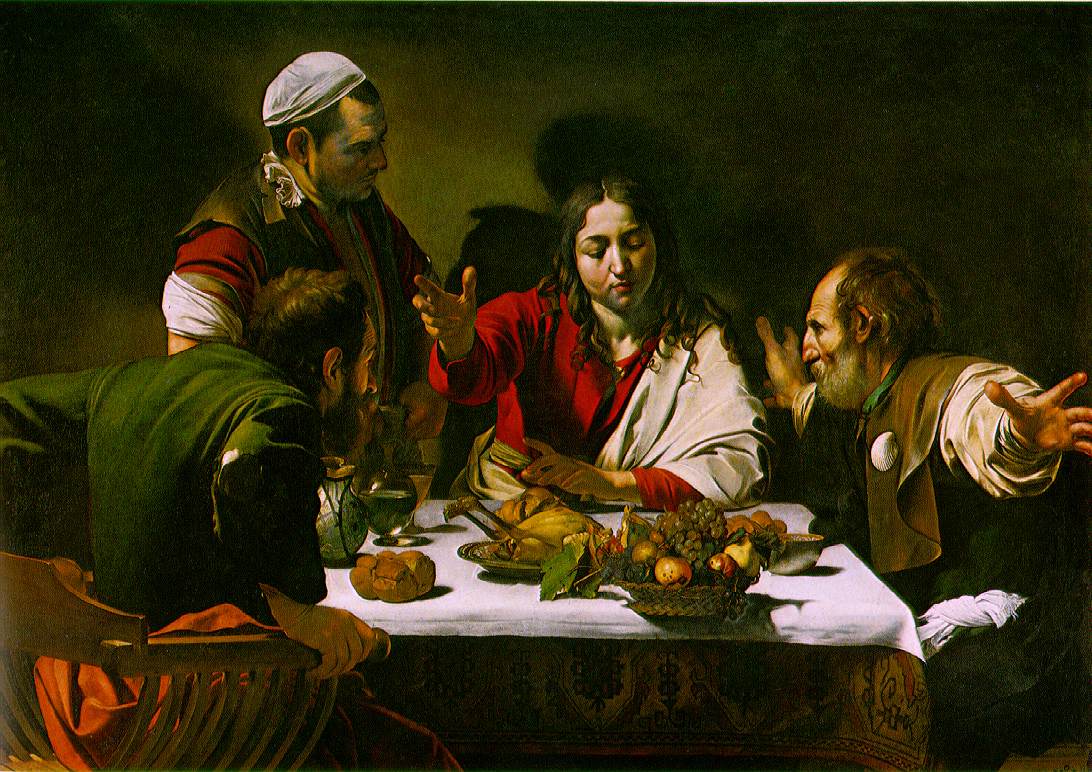
Supper at Emmaus - Caravaggio [1573-1610]
c. 1600-01; Oil on canvas, 54 3/4 x 76 3/4 in; National Gallery, London

Gil Bailie has blessed the Three Massketeers and his many other friends with a chronicle of love here. As a prayer and affirmation of our faith in the faith of the Church, let the reader meditate upon these words from the Catechism of the Catholic Church [No. 655]:
Christ's Resurrection -- and the risen Christ himself -- is the principle and source of our future resurrection: "Christ has been raised from the dead, the first fruits of those who have fallen asleep ... For as in Adam all die, so also in Christ shall all be made alive" [I Cor 15,20-22]. The risen Christ lives in the hearts of his faithful while they await that fulfillment. In Christ, Christians "have tasted ... the powers of the age to come" [Heb 6,5] and their lives are swept up by Christ into the heart of divine life, so that they may "live no longer for themselves but for him who for their sake died and was raised" [2 Cor 5,15].

Monday, February 12, 2007

Quasi-Review of Bernadette


by Porthos

I enjoyed watching the movie Bernadette on EWTN, but find there's not much written about it, even at the IMDB site just linked. This 1988 movie invites the inevitable comparison with The Song of Bernadette, the classic with Jennifer Jones and Vincent Price. This version is clearly not as well-produced and looks more like a BBC adaptation or made for TV production than a proper "movie" movie. (But some of my favorite movies are made for TV productions--e.g. Lonesome Dove, the Pride and Prejudice with Colin Firth--so that doesn't bother me. )

As a "Lourdes" movie, this one is more accurate and is very much worth seeing, IF you've got a devotion to, or special interest in, Our Lady of Lourdes, or Bernadette. Sydney Penny looks quite a bit more like the real 14 year old Bernadette Soubirious than did Jennifer Jones--though ya gotta love Jennifer Jones in Song of Bernadette. Great as JJ's performance was, Penny is more convincing as an untaught but somewhat street-wise teenage peasant girl and shepherdess, rather than the angelic, floating-on-clouds ingenue so charmingly portrayed by Jones. This movie is better at dealing with the actual sequence of the apparitions, whilst Song of Bernadette is better at dealing with other personal threads of the story (city officials, priests, nuns, etc.). This film is also better, or at least a little more perceptive, in its treatment of the various "crowds" in the story (mobs, townpeople, police, religious)--including the crowds of crazed admirers. Song of Bernadette, however, is better at setting up camera shots of crowds and capturing crowd dynamics on film.

I would have liked to see this movie in the original French with subtitles. They did a fairly good job with the dubbing--or at least, not a horrible one, as far as I could notice.

My somewhat surprising conclusion (surprising to me, anyway) is that it is mainly Bernadette, as played by Penny (in comparison with the same role as played by Jones in the classic) that is the chief advance of this film. In addition, the director of this version made a wise choice not to show the vision itself, but only Bernadette's ecstatic, "lit" face as she's experiencing it. Song of Bernadette suffers for showing Our Lady as almost a sort of fairy godmother (or Good Witch of the East) type figure. This has always gotten at least a little in the way for me in the original, AND I found out later that it is also very inaccurate (Bernadette saw Our Lady as a girl of about her own age).

I was dissappointed that this movie did not follow Bernadette further into the cloister as did Song of Bernadette (some of the strongest scenes in Song of Bernadette take place there). BUT, in digging around IMDB I found that there is actually a sequel to this version, also with Penny playing the lead, called The Passion of Bernadette! I would love to see this!

Porthos' final word? One and a half thumbs up for Bernadette

Sunday, February 11, 2007

Impressions of Mahler and especially the 8th

I freely admit that Mahler's not for everybody, and not even all Mahler is equally good for Mahler fans. I just want to report that I've been getting more into Mahler as contemplative music (for instance, the Adagio of the 4th and the Adagietto of the fifth are, surprisingly, excellent for recollection and prayer).

But what's really struck me is how kick-*ss Mahler's 8th is. I didn't really begin to explore Mahler's 8th until I posted that You Tube of the "Chorus Mysticus" in a much earlier post. However, the Chorus Mysticus was so good that I thought I should listen to the whole thing (and found out, to my great pleasure that I actually had a cassette of it that I had made several years ago from the CD of an acquaintance).

I understand why I did not at first groove on Mahler's 8th--it seems like a lot of surging and bombast and swelling and caterwauling, and it's very choral pretty much all the way through--my preference used to be for instrumental and not choral music. BUT the "Chorus Mysticus" is basically a distillation of what Mahler did through the whole symphony, and when you start digging on that whole symphony, it's amazing stuff. This symphony has layers, levels of appreciation that you rise through every time you listen to it.

Oh, and also, it's deeply religious. Mahler's 8th is essentially a hymn.

Highly recommended.

Saturday, February 10, 2007

Ancient Whisper in the Garden - Truth or Lie?

From Prayer for the Morning (February 8) in the Magnificat: Pride sets subtle snares. Whenever we imagine that we are in control of life - our own or someone's else's - we have fallen prey to the ancient whisper in the Garden: "You shall be like gods." Mortality is the enduring reminder that we become like God not by our own power but by the power of the cross.

I came upon the following and see what you think:
A Serpent in the Second Garden: The Plight of Cloistered, Contemplative, and Consecrated Nuns

Some still hear the ancient whisper, even in the lingering, the serpentine shadows of their lengthening years. And to those who give heed in a withering night, it deceives, even now in the end as it did in the beginning – and this is the lie:

“The Second Garden, the Cloister Wall, is a dangerous fiction as was the first promise of God, seducing men and women to believe that the call to prayer and not the clarion to social reform is the remedy of the world; that strident voices, and not sacrificial lives, redeem the world of its evil; that unbridled self-assertion, not humility and silence, assuage the suffering of man.

Tear down the Garden walls! Pull down the Cloister and make the Vineyard of God a brothel of men; predate the Vine and prepare the winepress. Self-fulfillment … not sacrifice! This is what the world craves for, although it is not what the world needs. Like Joseph in the desert, let the dreamers all die. It is the workers who have built the great marvels in Egypt and at so paltry a price as slavery to sin!”

Of what possible use are these dreamers of prayers? What have they accorded you? Better to prevail in suits on the courts of men, than in prayers before the Courts of God.

Poverty? It is your curse. Chastity? It is your bane. Obedience? It is your abasement!”


In an age of unbridled self-esteem and self-assertion, there is no room for Cloisters that hem in the hubris of women and the madness of men.

… or is there?

Distributism 101


In Athos' Profile, the reader may notice an interest in Distributism. What's that? In the late 19th / early 20th centuries, proponents of Distributism included Hilaire Belloc, G. K. Chesterton and Father Vincent McNabb, and all three penned books attempting to steer western societies away from both socialism and capitalism in favor of Distributism. Co-founders of the Catholic Worker, Peter Maurin and Dorothy Day attempted an urban version of it (difficult to do in New York City) and a purer form of it in a rural setting (still practiced at Peter Maurin Farm). Perhaps more in the reader's memory is the most celebrated and recent expression of Distributism, Small is Beautiful, by E. F. Schumacher. This nearly ubiquitous book twenty-five years ago stirred the imagination, if not stirring to action, the generations most affected by the return-to-nature elements of the sixties and seventies.

Distributism isn't simply a Luddite response to the alienation of modern technocratic, microwave/Bluetooth/laptop/iPod-dependent life. It was, and is, a serious response to both the Industrial Revolution and a true spiritual need for human beings to belong on the land. Their land. Distributism says, humans are really Hobbits at heart. We become slightly, moderately, or gravely disordered when we get too far from this reality.

Distributism is grounded in the Church's teachings. In 1891, Pope Leo XIII issued the Encyclical, Rerum Novarum. It is the Church's teaching on labor and capital, as well as the proper role of the modern State. It says a great deal about human nature, dignity, and justice. Sadly, it says a great deal more than modern states or captains of industry and commerce want to hear -- so it is ignored.

But Distributism is not meant for the shelf. Distributism is not a theologized hippie's dream. I suggest strongly that the reader refer to the website, bibliography, and ideas found here. There may be hope for sane human living. And it is a goal that is scriptural, doable, and hopeful. Don't you think?


Friday, February 09, 2007

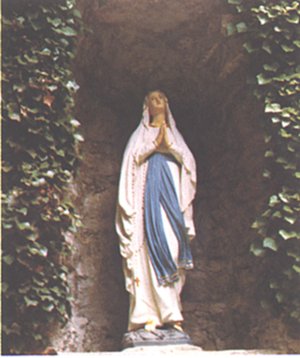
Our Lady of Lourdes


Just a friendly reminder. The Feast Day of Our Lady of Lourdes is Sunday, February 11.

Our Lady of Lourdes is special to myself and my family in a lot of ways. The movie Song of Bernadette (which I love but which you Massketeers might find a bit corny) touched the areligious Lady Porthos, and tweaked a devotional switch in her which I cannot really understand; but that devotion, in turn, touched off lots of quirky and subtle and mysterious graces--also rather beyond my comprehension.

There's going to be another movie, Bernadette, on EWTN. If I can get my inner International clock tuned right (that is, more than twice a day) I'll try to catch it. Below are the times listed at EWTN's site (Eastern Time).

BERNADETTE
Feb 10,  8:00pm
Feb 11, 2am
Feb 15, 1pm

To stream EWTN, go to http://www.ewtn.com/ and pull down the multimedia menu to "Live TV - English."

Wednesday, February 07, 2007

Four Months on

Our first post was Nov. 6. That's four months of Massketeering!

(And four weeks w/out cigarettes.)

Whither the Massketeers?

Monday, February 05, 2007

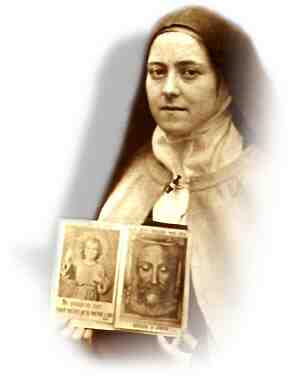
Thérèse of Lisieux, the Little Flower


Sightings of the Little Flower, Thérèse of Lisieux have been occurring on our posts of late as well as in the book I am reading Christology From Within by Mark McIntost on Hans Urs von Balthasar. McIntosh writes in his book that von Balthasar feels that obedience is a means of self-discovery far better than our usual process of discerning, reflections or scrutinizing of ones own talents and potentialities.
“In the case of Thérèse, the self-discovering journey of obedience begins with the move into Carmel. Only in this way, says von Balthasar, could the potential dynamic in her life grow into an “infinity movement.”

“What Thérèse needs is that her personality should die, and that she should be reborn as a person at a level where she has to draw upon all her latent possibilities… Through entering this new state of life Thérèse is given the opportunity to shed her personal limitations and acquire the stature which is hidden for her in God and is only to be revealed through her mission to the Church."

Check out the following site for chapter III of Thérèse OF LISIEUX - THE STORY OF A MISSION, by Hans Urs Von Balthasar, Sheed and Ward, New York, 1954 - This chapter may open up the depth of the teaching of Saint Thérèse on the "little way" in a whole new and exciting way! Hans Urs von Balthsar shows just how radical, innovative this little saint is, and yet how traditional and how rooted in the Catholic vision. It is my own opinion that this book on Thérèse, just one chapter of which is reproduced here, may have contributed greatly to the ultimate decision made by our Pope, John Paul II, to declare Saint Thérèse a "Doctor/Teacher of the Universal Church." Her doctrine goes to the heart of the Gospel, and perhaps not all have really discovered its riches yet.... and it is my joy to make this available.

A side note: I must say that my wife and I did not think much of the movie Thérèse

Seven Storeyed Selections I

I am nearing the conclusion of Thomas Merton's The Seven Storey Mountain, an astonishing book which seems to tell my own life story as well as Merton's--and not only my past tense life story, but my present tense life story: unlikely movements of grace rocking me at the precise points they were nudging Merton toward contemplation. (Let me hasten to add, I am no Thomas Merton, by any stretch of the imagination!) I was touched also by the role Therese of Lisieux, the Little Flower, played in his story; she has played a considerable role in mine as well.

Anyway . . .

Some quotes, especially near the beginning, seemed to have "Athos" written all over them:

How did it happen that, when the dregs of the world had collected in western Europe, when Goth and Frank and Norman and Lombard had mingled with the rot of old Rome to form a patchwork of hybrid races, all of them notable for ferocity, hatred, stupidity, craftiness, lust and brutality--how did it happen that, from all this, there arose the poems of Prudentius, the commentaries and histories of Bede, the Moralia of Gregory the Great, St. Augustine's City of God, and his Trinity, the writings of St. Anselm, St. Bernard's sermons on the Canticles, the poetry of Caedmon and Cynewulf and Langland and Dante, St. Thomas' Summa, and the Oxoniense of Duns Scotus?

How does it happen that even today a couple of ordinary French stonemasons, or a carpenter and his apprentice, can put up a dovecote or a barn that has more architectural perfection that the piles of eclectic stupidity that grow up at the cost of hundreds of thousands of dollars on the campuses of American universities? (p. 30)


And . . .

The church had been fitted into the landscape in such a way as to become the keystone of its intelligibility. Its presence imparted a special form, a particular significance to everything else that the eye beheld, to the hills, the forests, the fields, the white cliff of the Rocher d'Anglars and to the red bastion of the Roc Rouge, to the winding river, and the green valley of the Bonette, the town and the bridge, and even to the white stucco villas of the modern bourgeois that dotted the fields and orchards outside the precinct of the vanished ramparts: the significance that was thus imparted was a supernatural one.

The whole landscape, unified by the church and its heavenward spire, seemed to say: this is the meaning of all created things: we have been made for no other purpose that that men may use us in raising themselves to God, and in proclaiming the glory of God. We have been fashioned, in all our perfection, each according to his own nature, and all our natures ordered and harmonized together, that man's reason and his love might fit in this one last element, this God-given key to the meaning of the whole.

Oh, what a thing it is, to live in a place that is so constructed that you are forced, in spite of yourself, to be at least a virtual contemplative! Where all day long your eyes must turn, again and again, to the House that hides the Sacramental Christ!

I did not even know who Christ was, that He was God. I had not the faintest idea that there existed such a thing as the Blessed Sacrament. I thought churches were simply places where people got together and sang a few hymns. And yet now I tell you, you who are now what I once was, unbelievers, it is that Sacrament, and that alone, the Christ living in our midst, and sacrificed by us, and for us and with us, in the clean and perpetual Sacrifice, it is He alone Who holds our world together, and keeps us all from being poured headlong into the pit of eternal destruction. And I tell you there is a power that goes forth from the Sacrament, a power of light and truth, even into the hearts of those who have heard nothing of Him and seem to be incapable of belief. (p. 37)

Thursday, February 01, 2007

The Crescent, the "Blond Beast" & the Lamb of God

Mont Saint-Michel, which dates from the 8th century A. D. +

Over at Mark Gordon's SuicideoftheWest, he posits, 'If after 2,000 years Christ has not penetrated European man, it is our fault, and it’s past time we began asking ourselves “Why?”'

In former days, Athos put great stock in the analytical psychology of Carl Jung. His insights still can be helpful, as, I think, the following shows. In Two Essays on Analytical Psychology, Jung writes the following:
The case of Nietzsche shows, on the one hand, the consequences of neurotic one-sidedness, and, on the other hand, the dangers that lurk in this leap beyond Christianity. Nietzsche undoubtedly felt the Christian denial of animal nature very deeply indeed, and therefore he sought a higher human wholeness beyond good and evil ... He delivers himself up unresistingly to the animal psyche. That is the moment of Dionysian frenzy, the overwhelming manifestation of the "blond beast" ... a relapse into a pagan form of religion, so that in reality nothing new is discovered and the same story only repeats itself from the beginning ... (As such,) the ecstatic by-passes the law of his (or her) own life and behaves, from the point of view of nature, improperly.
It seems to me Jung shows that Friedrich Nietzsche's life was microcosm of and served as a template for the woes of today's Europe. We cannot say that Europe, once Christendom, was ever a thorough-going homeland for the faith of Our Lord. The "blond beast" was ever there in the crowd, the mob, the accusatory, satanic gesture that distinguished the "righteous" we from the "witch", the "poisoner", the one with the "evil eye" -- all the while blessed by a Church that did not know (yet) how to follow her Lord to stay beside the least, the last, and the lost, except in her saints.

It may be that Europe, once the offspring of the the Catholic Church, must now be chastened for wanting to have worldly power with a sprinkling of sanctity, bestiality and spirituality, Christ AND Dionysus. And that chastisement comes in the form of a warlord wielding the crescent and scimitar. The biblical God has a predictable way of using the most unlikely ways and means for meting out justice, y'know.

The Old Testament prophets told God's Chosen Ones that they were not permitted to worship on the Sabbath and attend "prayer meetings" at the Ba'al shrines on Wednesday nights. Banishment, exile and subsistence living in Babylon was the result. Is it such a stretch to say that the worshipers of "the animal psyche" will have to bow under the stern, humorless gaze of an Islamic taskmaster for penance?

The "blond beast," worship of Dionysus nee Ba'al and Molech, still has to be dealt with. Scripture, Tradition and the Magisterium make sure we can still hear the words of Our Lord today:
Anyone who does not remain in me will be thrown out like a branch and wither; people will gather them and throw them into a fire and they will be burned. -- John 15:6
A shame too. Mont Saint-Michel just won't look right with a crescent atop its spire.