Showing posts with label Science. Show all posts
Showing posts with label Science. Show all posts
Wednesday, January 19, 2011


Sunday, May 16, 2010
Saturday, March 27, 2010
Polkinghorne - Humility and Science
Continuuing on the theme begun by brother Aramis, eminent physicist and ordained Anglican priest, John Polkinghorne, opines on humility, science, and faith here.
Saturday, February 20, 2010
Lenten Wilderness and Earth Science
 The thing I love about teaching earth science to a gaggle of middle schoolers is that I get to (a) drop momentarily out of the mimetically-driven hall of mirrors of fallen human funny business for a brief time, and (b) consider the breath-taking facts of such things as plate tectonics and geologic time scale.
 Take for instance Heather Catchpole's article, Islands of Fire, in which she visits New Zealand's hot spots and which I will let you read for yourself. As I've said before, you couldn’t make this stuff up.
What stuff? Oh, like the fact the outer core of our planet is a billion trillion tons of molten iron spinning at 1,000 mph, thus creating the electromagnetic field that comes out one pole, around the planet, and reenters it at the other pole, protecting us from the same solar radiation that scoured Mars when its EM field collapsed? (Don't worry. Ours won't collapse for many millions of years. We are, however, overdue for a reversal of our EM field; meaning, our Boy Scout compasses will all, then, point south.) Go write something like that and try to find a literary agent who will find it "credible".
Read Catchpole's article (above). It may explain why Our Lord went to the wilderness (besides being tempted by Satan), far from the maddening crowd.
Sunday, August 16, 2009
Atheists are Fussbudget Ninnies
 OFTEN ONE WILL HEAR atheists proclaim that we are here due to the random dance of atoms occurring in a vastly uninhabited, ferociously beautiful, yet totally fluke-filled universe. We are "the stuff of stars," as dear old Carl Sagan said.
And I, of course, agree with Carl's statement, being an Earth Science middle school teacher. We are indeed begotten from the star matter (plasma, baby - and that's as close as I ever want to get to it).
We dwell in a tiny cocoon of atmosphere around our tiny, garden planet, protected from solar radiation by an electro-magnetic field that is produced because the outer core of our planet is a billion-trillion tons of molten iron spinning around the inner core of solid iron at about one thousand miles an hour (I am not making this stuff up - who could?) which sends the EM field out one pole, around the Earth, and back in the other. This, by the way, flips every so often, causing the mid-Atlantic ridges to show the reversal in polarity with geologic time scale frequency. Your compass will one day point south. Yep.
And besides this, we are beings dwelling in this tiny, protected, garden planet that can imagine all of this in our puny minds which are inextricably intertwined somehow with seven pounds of gray matter between our ears and who can talk about it with one another due to the manufacture of language in the Wernicke region of our brains. (As Walker Percy said of this in his famous Thomas Jefferson lecture of the humanities in 1989, "The Fateful Rift: The San Andreas Fault in the Modern Mind" - "Draw me a picture of us 'picking out language' from the Wernicke region. Go ahead. Draw me a picture.")
And as G. K. Chesterton pointed out, "It is an act of faith (on the part of scientists, largely unacknowledged) to assert that our thoughts have any relation to reality at all."
So, I find it remarkable that atheists are atheistic, given the above facts. What an amazing pile of remarkable "coincidences" and "random dance-steps!"
My Catholic faith, on the other hand, has produced some of the greatest scientific thinkers of western civilization, bar none, and depends completely upon both common sense and high rationality the likes of which cannot be found elsewhere.
And if our Creator was kind enough to allow each of us into the greatest Adventure of all - namely, being blessed enough to be born and avoiding that man-made obstacle, abortion - surely, surely, we can depend upon Him to see that that which follows this biological existence will be at the proper focus distance to see, provide sufficient existential and ontological substantiation to still remain His be-ings (if it be His will), and be a part of something at least, if not more, miraculous than all astonishing existence we now share.
For more important facts, get your copy of A Little Guide for Your Last Days.
Monday, April 27, 2009
Wednesday, April 08, 2009
Is it real? Or is it ... a Hoax? Or Memorex? Or Photoshop? Or Myth?
The video in my previous post I think is too important not to comment on it further. Below I have included the link to Father Barron's sermon that the video was drafted from.
Father Barron's sermon regarding the difference between myth and Gospel or as he titles it, The Resurrection of Jesus is Not a Myth
Please give it a listen and understand I fully support his argument, however I believe that sermons like this no longer open the hearts of many people today, just look at this, another intuitive observation from Father Barron.
I want to take off on the last sentence in his last article: "The great good news is that this choice of his cannot be undone by any choice of ours." I BELIEVE THIS, but I seriously do not believe that most, whether non-practicing Christians to even many who will be sitting in pews this coming Sunday, believe it! At least at the level of conventional culture and its education over the last 50 to 60 years. People of the 'West' have been influenced and have bought into such drivel and myth that we have closed ourselves up and are no longer able to hear what Father Barron is alluding to. It may still be scandalous to some but it is time to bring faith and reason together and get to a serious level of talk about violence or what Girard/Bailie talk about when they refer to the mimetic interplay.
There no longer is any excuse not to connect-the-dots between violence, religion and truth!
Let me refer a little to Violence Unveiled by Gil Bailie:
Father Barron's sermon regarding the difference between myth and Gospel or as he titles it, The Resurrection of Jesus is Not a Myth
Please give it a listen and understand I fully support his argument, however I believe that sermons like this no longer open the hearts of many people today, just look at this, another intuitive observation from Father Barron.
I want to take off on the last sentence in his last article: "The great good news is that this choice of his cannot be undone by any choice of ours." I BELIEVE THIS, but I seriously do not believe that most, whether non-practicing Christians to even many who will be sitting in pews this coming Sunday, believe it! At least at the level of conventional culture and its education over the last 50 to 60 years. People of the 'West' have been influenced and have bought into such drivel and myth that we have closed ourselves up and are no longer able to hear what Father Barron is alluding to. It may still be scandalous to some but it is time to bring faith and reason together and get to a serious level of talk about violence or what Girard/Bailie talk about when they refer to the mimetic interplay.
There no longer is any excuse not to connect-the-dots between violence, religion and truth!
Let me refer a little to Violence Unveiled by Gil Bailie:
Participants in Western culture have lived for so long under the influence of the biblical ethos that it is difficult for us to fully appreciate its uniqueness. So pervasive is the concern for victims it arouses that there is a tendency for us to think of it as either a natural, universal emotion or a personal moral achievement for which the individual can take credit. Were either of those assumptions the case, Nietzsche would have been simply wrong about Christianity. He wasn’t simply wrong. He was mad. He was totally wrong, but he wasn’t simply wrong. The Christian gospels have done what Nietzsche accused Christianity of doing, though not for the reasons he alleged.Bailie goes on:
Whatever “natural” empathy for one another we may have under any given set of circumstances, an empathy specifically for victims as victims is a cultural and not a natural phenomenon. Not only is it not a natural emotion; in many cases it is not even a welcomed one. Those in whom this empathy awakens often try to suppress it in favor of more practical and conventional loyalties. Nietzsche was able to see that in those cultures influenced by the biblical tradition this empathy for the victim had gradually become a major historical force, one that was throwing conventional culture into disarray.
We have been unable to recognize the clumsy attempts to revive the sacrificial ethos of pagan antiquity in our world because we haven’t fully understood the anthropological patterns to which these attempts conform. When we catch glimpses of these anthropological patterns, we blink in incredulity or we think them the product of the rich imagination of archaic peoples.The fact is:
The generic term for the systematic misrecognitions that have veiled the victim’s face and silenced the victim’s voice is myth. If we live at a moment in human history when “history” is no longer able to screen us from the apocalypse, no longer able to explain away the violence it documents, it is because in our day “history” is exhausting the last vestige of its mythological power. In the foreseeable future, neither religious mystification nor the solemn and quasi-religious causes of “history” will sufficiently veil our violence from our own eyes, nor keep us from seeing the faces of our victims.
Fundamentally, human history is a struggle between myth and Gospel. Literature, as it has developed in Western culture, is neither myth (muthos) nor truth (aletheia), it is the textual arena in which the two struggle for the upper hand. What myth conceals, what literature alternately conceals and reveals, and what the Gospel decisively reveals are the social dynamics that produce what Girard calls “the essential complicity between violence and human culture.”All this means is that myth is still operating at the foundation of our institutions influencing us (as in this post) and is at the heart of what Jesus is saying here:
John 8, 43-47: “Why do you not understand what I am saying? It is because you cannot hear My word. “You are of your father the devil, and you want to do the desires of your father. He was a murderer from the beginning, and does not stand in the truth because there is no truth in him. Whenever he speaks a lie, he speaks from his own nature, for he is a liar and the father of lies. “But because I speak the truth, you do not believe Me. “Which one of you convicts Me of sin? If I speak truth, why do you not believe Me? “He who is of God hears the words of God; for this reason you do not hear them, because you are not of God.”I want to close with a couple quotes from another Girardian, Raymund Schwager and his book, Banished from Eden - Original Sin and Evolutionary Theory in the Drama of Salvation:
"... in the history of humanity, and above all in the history of the Christian message, there appears a dramatic struggle between contending powers, a struggle which in modern times has not abated but has even increased in somewhat more subtle forms. In view of this dramatic struggle we need, on the one hand, a cool clear-sightedness, which does not close its eyes before whatever is hostile and try to argue it away; on the other hand, faith in a real redemption is necessary, so that in the long run negative mechanisms will not be taken for natural occurrences which would be totally unchangeable."(Read this post)
"In light of the world-spanning media and economic forces, counter-institutions are necessary that are likewise world spanning and are based neither on money nor the fashions of the media world. The Church as such a counter-institution is of course often helpless and powerless; yet it keeps fundamental alternatives open and so, in spite of problems in its own ranks, resists the tendency to gradually substitute marketing strategies for democracy, which in subtle ways revert completely to the friend-enemy distinction. The doctrine of original sin does not create our political problems, but it certainly circumscribes the greatness of the task. It enables us to judge which proposed solutions are realistic, and thus guards us against counterproductive and better consequences of utopian experiments while making clear that only a faith that can move mountains will be able to bring about genuine improvements in history."(Review here)
Wednesday, February 18, 2009
One More Post on Postman
(See HERE to view my previous writing on Postman) I want to throw out another Neil Postman post, as he has many attention grabbing ideas, but it may be my last at least for a while for as I read more of his articles online these last 2 days I began to again feel drawn to a much deeper and fuller reservoir of knowledge, or may I say, truth of us human beings, that being the work of René Girard. This is not to put down Postman for he helped me come to see much about the human predicament. He made sense out of what was going on around me as a student of human behavior - through my interest in marketing/advertising, as a retail store entrepreneur and as a parent of a special needs child (and his struggles particularly with schooling - right or wrong his mother and I chose public education for him). Anyway, here is a sample of juicy thoughts to ponder from Neil Postman's Amusing Ourselves to Death.
Today, some 22 years after this book, I can't help but see where we are beginning to experience some of Orwell's fears coming into play, maybe due in part because of how deeply Huxley's fears took root in our beings and then in our culture. If allowed to bring in a bit of mimetic theory, I think Huxley's comment about our huge "appetite for distractions" easily advances us to what Gil Bailie relates - the generational effect of this distraction, where its fruits are a generation of hearts of indifference or defiance. And these hearts of indifference or defiance will inevitably usher in a "revolution" from outside (enter Orwell's fear). Though great in their overt ways of grabbing the attention of the masses, these 2 authors were telling, maybe in a rudimentary manner, what the Church has been pronouncing some 2000 plus years and what Girard more recently has re-focused in methodology that some sciences can start to incorporate into their research.We were keeping our eye on 1984. When the year came and the prophecy didn't, thoughtful Americans sang softly in praise of themselves. The roots of liberal democracy had held. Wherever else the terror had happened, we, at least, had not been visited by Orwellian nightmares.
But we had forgotten that alongside Orwell's dark vision, there was another - slightly older, slightly less well known, equally chilling: Aldous Huxley's Brave New World. Contrary to common belief even among the educated, Huxley and Orwell did not prophesy the same thing. Orwell warns that we will be overcome by an externally imposed oppression. But in Huxley's vision, no Big Brother is required to deprive people of their autonomy, maturity and history. As he saw it, people will come to love their oppression, to adore the technologies that undo their capacities to think.
What Orwell feared were those who would ban books. What Huxley feared was that there would be no reason to ban a book, for there would be no one who wanted to read one. Orwell feared those who would deprive us of information. Huxley feared those who would give us so much that we would be reduced to passivity and egoism. Orwell feared that the truth would be concealed from us. Huxley feared the truth would be drowned in a sea of irrelevance. Orwell feared we would become a captive culture. Huxley feared we would become a trivial culture, preoccupied with some equivalent of the feelies, the orgy porgy, and the centrifugal bumblepuppy. As Huxley remarked in Brave New World Revisited, the civil libertarians and rationalists who are ever on the alert to oppose tyranny "failed to take into account man's almost infinite appetite for distractions". In 1984, Huxley added, people are controlled by inflicting pain. In Brave New World, they are controlled by inflicting pleasure. In short, Orwell feared that what we hate will ruin us. Huxley feared that what we love will ruin us.
This book is about the possibility that Huxley, not Orwell, was right.
Tuesday, February 17, 2009
Reality Check - Postman to Girard
Most important tip to Athos HERE and Daniel Mitsui HERE
I have been highly influenced by Neil Postman – particularly studying his early works Teaching As a Subversive Activity and The Disappearance of Childhood. It was in his works as well as the work of A.S. Neill that I started to realize the violence (at an institutional level) that we inflict on our children under our particular guise of education or catechizing as well as how that violence is slapped right back into our faces. I eventually fell away from his work shortly after discovering the work of Réne Girard yet Postman reappears here for me again.
All his points on the effect of technology on religious faith are intriguing yet I would like to pick up something from his point #4:
On a different level I wanted to challenge us: Today we all make harangues (legitimate as they may be) against the encroachment of Islam into the West yet we remain veiled to how we ourselves usher Islam in by how we have allowed our very own culture to divide and conquer us – having us live lives in compartments separating our Christian faith and values from all the other aspects of our daily life. This cultural and psychological delusion of a separation of and from faith propels us into a ‘hell’ of its own needing no help from others of different religions. The implosion - a “failed transmission” of our faith - that the West is headed toward is in large part due to a fatherlessness that results in each later generation bearing hearts of greater indifference or defiance – neither condition able to pass on the viable and passionate faith of Abraham, Jesus and Paul. (Download Jan09 mp3 file of a talk given by Gil Bailie from his Emmaus Road Initiative)
If there is a growing awareness tugging at your heart calling you out of our violence to start the process of blending your separateness into wholeness may we suggest that you not only get fully active at your parish but that you pick up a work of Réne Girard, Evolution and Conversion: Dialogues on the Origins of Culture. Gil Bailie and his Emmaus Road Initiative is another great way toward integrating the legions of separation within and finding yourself kneeing in the Real Presence.
Lastly, let me change a word or two in Neil Postman's point #5 to make my final thought.
Our enthusiasm for the West (as we have created it to be today) can turn into a form of idolatry and our belief in its beneficence can be a false absolute. The best way to view the West is as a strange intruder, to remember that it is not part of God's plan but a product of human creativity and hubris, and that its capacity for good or evil rests entirely on human awareness of what it does for us and to us.
The heart of this awareness is a transformed education and catechizing that Gil so aptly talks about HERE:
If individually and most importantly as we come to realize that it is only through helping others – so also collectively are to find our way back to the narrow path we must be aware that it is only through Him and that all other roads will lead, sooner or later, to a catharsis of blood-letting, nihilism and violence – the culture of death.
I have been highly influenced by Neil Postman – particularly studying his early works Teaching As a Subversive Activity and The Disappearance of Childhood. It was in his works as well as the work of A.S. Neill that I started to realize the violence (at an institutional level) that we inflict on our children under our particular guise of education or catechizing as well as how that violence is slapped right back into our faces. I eventually fell away from his work shortly after discovering the work of Réne Girard yet Postman reappears here for me again.
All his points on the effect of technology on religious faith are intriguing yet I would like to pick up something from his point #4:
Being a small business entrepreneur AND having studied violence, including the violence at the institutional and structural level, I am in tune with the dark side of Capitalism and I agree with Athos that with a statement like the above Postman opens the door for us to hopefully explore Distributism on a much deeper level.“That is also why we must be suspicious of capitalists. Capitalists are by definition not only personal risk takers but, more to the point, cultural risk takers. The most creative and daring of them hope to exploit new technologies to the fullest, and do not much care what traditions are overthrown in the process or whether or not a culture is prepared to function without such traditions. Capitalists are, in a word, radicals....
“I trust you understand that in saying all this, I am making no argument for socialism. I say only that capitalists need to be carefully watched and disciplined. To be sure, they talk of family, marriage, piety, and honor but if allowed to exploit new technology to its fullest economic potential, they may undo the institutions that make such ideas possible.”
On a different level I wanted to challenge us: Today we all make harangues (legitimate as they may be) against the encroachment of Islam into the West yet we remain veiled to how we ourselves usher Islam in by how we have allowed our very own culture to divide and conquer us – having us live lives in compartments separating our Christian faith and values from all the other aspects of our daily life. This cultural and psychological delusion of a separation of and from faith propels us into a ‘hell’ of its own needing no help from others of different religions. The implosion - a “failed transmission” of our faith - that the West is headed toward is in large part due to a fatherlessness that results in each later generation bearing hearts of greater indifference or defiance – neither condition able to pass on the viable and passionate faith of Abraham, Jesus and Paul. (Download Jan09 mp3 file of a talk given by Gil Bailie from his Emmaus Road Initiative)
If there is a growing awareness tugging at your heart calling you out of our violence to start the process of blending your separateness into wholeness may we suggest that you not only get fully active at your parish but that you pick up a work of Réne Girard, Evolution and Conversion: Dialogues on the Origins of Culture. Gil Bailie and his Emmaus Road Initiative is another great way toward integrating the legions of separation within and finding yourself kneeing in the Real Presence.
Lastly, let me change a word or two in Neil Postman's point #5 to make my final thought.
Our enthusiasm for the West (as we have created it to be today) can turn into a form of idolatry and our belief in its beneficence can be a false absolute. The best way to view the West is as a strange intruder, to remember that it is not part of God's plan but a product of human creativity and hubris, and that its capacity for good or evil rests entirely on human awareness of what it does for us and to us.
The heart of this awareness is a transformed education and catechizing that Gil so aptly talks about HERE:
Precisely because the content of the Christian revelation is the mystery of unimpeded giving and receiving of love within the Trinity, its transmission necessarily depends on a relationship of unguarded trust on the part of the recipient – which, of course, places a special onus on the transmitter, for if the recipient is docile to the transmission and the transmitter betrays the heightened responsibilities that this docility requires, he or she stands under the judgment of Jesus’ words: “If any of you put a stumbling-block before one of these little ones who believe in me, it would be better for you if a great millstone were fastened around your neck and you were drowned in the depth of the sea.” (Matt. 18:6)
If individually and most importantly as we come to realize that it is only through helping others – so also collectively are to find our way back to the narrow path we must be aware that it is only through Him and that all other roads will lead, sooner or later, to a catharsis of blood-letting, nihilism and violence – the culture of death.
Postman - Technological Changes
Neil Postman via Daniel Mitsui: Five Things We Need to Know About Technological Change here.
Tuesday, October 07, 2008
R-E-S-P-E-C-T One Another - Do we know how today?
Interesting article in Prism magazine by Bruce Wydick that I found over at The Dawn Patrol.
Below is how Wydick explains his goal in writing about this subject.
The analogy is very good, but would be better if it were extended to men and women (who are both exploited, both in industry and in our sexual culture).
I've often noted that arguments for chastity focus on the emotional well-being of women while ignoring that of men, as if men are impervious to harm from extramarital sex. This seems, to my admittedly unstudied mind, to deny the critical truth that men are human too, and as such carriers of the same dignity (and emotion) as women.
It also seems to indirectly make chastity a matter of taking care of fragile, emotional women, which is selling it short. Chastity is about women and men respecting and looking after each other, mutually and with charity.
To me we commit violence on both women and men when we over-simplify the biological differences the way that Wydick does however his connection of the "love your neighbor" macro and the micro with a sense of social justice is solid. I also like his analogy:
Below is how Wydick explains his goal in writing about this subject.
My goal here is to help us understand why sex outside of marriage violates God’s laws and to reconnect it to some of the basic guidelines we find in Scripture concerning love for our neighbor, social justice, and a respect for the welfare of other human beings.
I will attempt to demonstrate why I believe sex outside of marriage violates these core values and is not an arbitrary rule imposed by a God who wants to ruin all our fun. On the contrary, I believe that the more closely we study this issue, the more we discover that God’s laws reveal his deep love for us as a creator who desires genuine happiness for us.He builds a good case however I have to agree with Andie, who left this comment on Dawn's blog;
The analogy is very good, but would be better if it were extended to men and women (who are both exploited, both in industry and in our sexual culture).
I've often noted that arguments for chastity focus on the emotional well-being of women while ignoring that of men, as if men are impervious to harm from extramarital sex. This seems, to my admittedly unstudied mind, to deny the critical truth that men are human too, and as such carriers of the same dignity (and emotion) as women.
It also seems to indirectly make chastity a matter of taking care of fragile, emotional women, which is selling it short. Chastity is about women and men respecting and looking after each other, mutually and with charity.
To me we commit violence on both women and men when we over-simplify the biological differences the way that Wydick does however his connection of the "love your neighbor" macro and the micro with a sense of social justice is solid. I also like his analogy:
—consensuality is an insufficient condition for social justice. But many male college students today will sleep out on the steps of the Capitol protesting sweatshop labor and then sleep with their girlfriends, completely unaware of the inherent contradictions of their beliefs and lifestyle.and his closing argument...
...sexual purity is at its root an act of social justice, and understanding this can help us to steer clear of sexual landmines. Because God is good, walking in obedience to his ways is what will ultimately give us the most joy.Can you imagine all the "liberal" social justice crowd realizing that sexual purity is at the root of their cause and in fact at the very root of their being?
Wednesday, August 06, 2008
Incensing the Altar to Alleviate Anxiety
 tip from Michael at Annunciations
From ScienceDaily (May 20, 2008) — Religious leaders have contended for millennia that burning incense is good for the soul. Now, biologists have learned that it is good for our brains too. An international team of scientists, including researchers from Johns Hopkins University and the Hebrew University in Jerusalem, describe how burning frankincense (resin from the Boswellia plant) activates poorly understood ion channels in the brain to alleviate anxiety or depression. This suggests that an entirely new class of depression and anxiety drugs might be right under our noses.
Continue reading
Monday, July 28, 2008
My Stroke of Insight - Jill Bolte Taylor
Clip is 18:44 long. If you can not get video to run click here to access website and watch video from there.
I had a stroke back in 2000 and much of what Jill Bolte Taylor describes in this presentation, I too felt. However, one difference for me, throughout my experience, from the very onslaught through to the healing process, I felt safe, snuggled securely in God's Hands, never questioning the outcome, regardless of what that may have been. The intellectualizing of what had happened to me did not really kick in until I came face to face, or rather when my entire sensory system became over-whelmed by the shock of massive stimuli walking into the first large retail chain store during my recovery. I'll leave that story for another time.
It was during the intellectualizing period (seeing the phenomenon of my stroke) that my center of gravity really began to shift. To help put this into words I quote from Anthony J. Kelly's book, The Resurrection Effect:
"when the given phenomenon begins to be appreciated in its own right and in the conditions of its appearance, the intentionality of the all-competent rational subject is reversed... A critical and even contemplative reverence for the given phenomenon becomes primary, thus allowing it first of all to be received on its own terms. The preconceptions and fixed points of our routine perceptions and representations are called into question, and our whole mode of perceiving is reordered."I feel that my studies in mimetic theory and Girardian thought had helped to prepare me for this gravitational shift - taking me from a perspective that was ego-centered to an outward contemplation of something more. All this can get hard to explain, so I will let Jill Bolte Taylor take you on a journey that hopefully will help you step out of yourself.
Wednesday, May 07, 2008
Science Is Value Neutral, Right?
It's right out of That Hideous Strength's Belbury or the labs of Auschwitz: Half man, half chimp - should we beware the apeman's coming? Evil wears white lab coats and, pondering what could we do next, falls into the nemesis of all human history, hubris. [h/t: Mark Shea]
Tuesday, October 23, 2007
Gagdad Bob on Science, Atheism, Intuition and Polanyi
A funky little reflection but maybe worth a read if you're a Michael Polanyi enthusiast (and I am).
Via Pajamas Media
Via Pajamas Media
Friday, August 24, 2007


Saturday, August 18, 2007
Dawkins' Delusion
 A physicist offers a rebuttal to the self-proclaimed "world's most prominent atheist," Richard Dawkins (mimetic theory would have something to say about ontological substantiation here - but that's another story). Edward Remler asks, "is 'the world's most prominent atheist' correct to assert that the existence of God is irrational? Only if he believes that the Fundamental Question of Philosophy is itself irrational, is our answer. The meaning of 'irrational' is flexible enough to allow a belief in the irrationality of the FQP; but this does not permit the 'irrationality of the existence of God' to be asserted as an authoritative truth. It is more aptly characterized as a religious faith of atheism ... The upshot of this is that it is simply foolish to assert that science and rationality support atheism."
Read the article here.
Monday, August 13, 2007
Mr. Wizard (It's a Slow Posting Day)
 Yeah, well, Bill Nye the Science Guy is just fine, but Mr. Wizard was our cool science dude. Just watch ...
Friday, August 10, 2007
Back to the Drawing Board
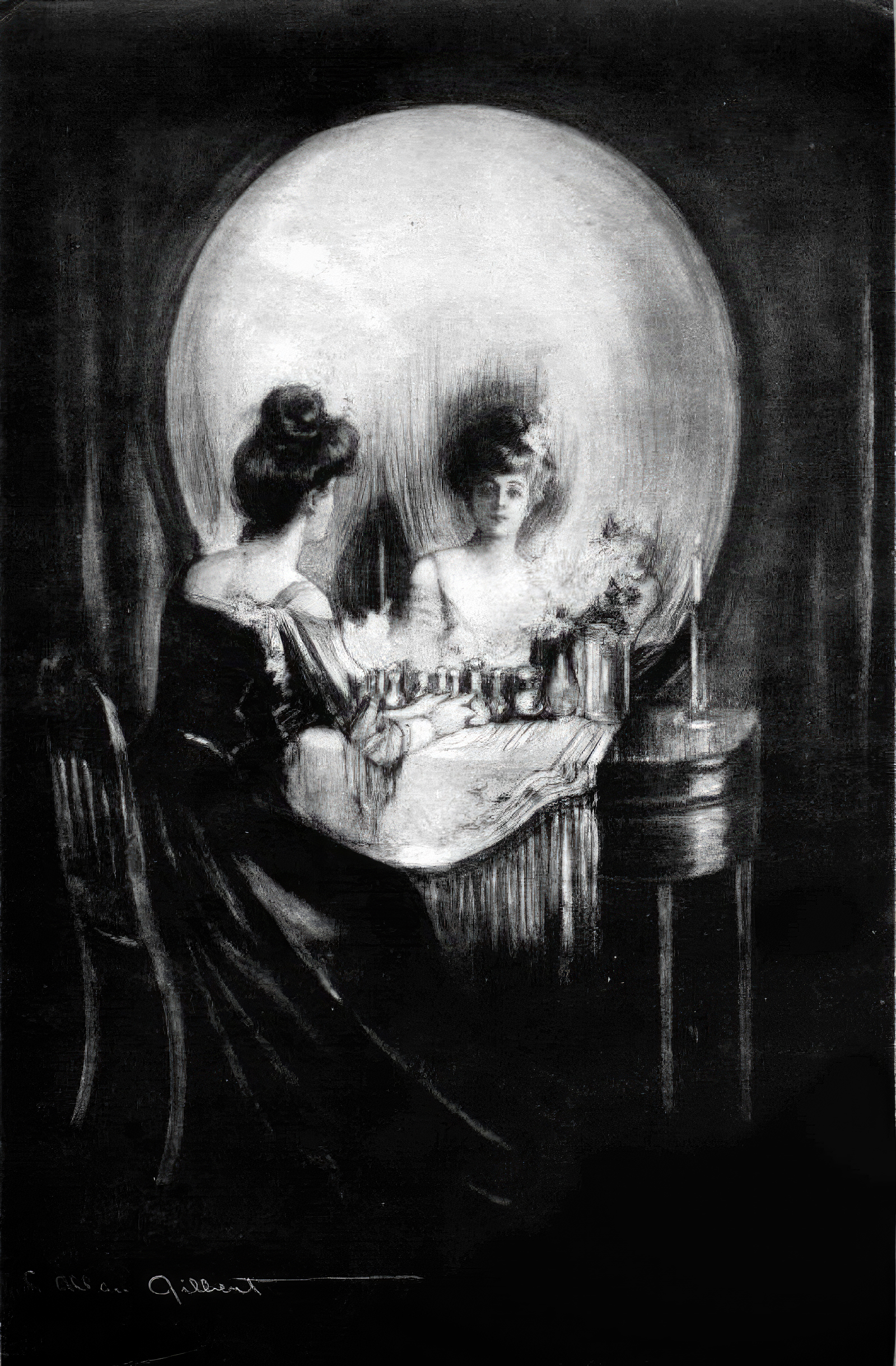 Having just posted on the difficulties of the juncture of Islam and science, here is a praiseworthy note: those who posited careers on human evolution going a certain direction are back to square one. Intellectual honesty and the scientific research method win out over fraud and burying evidence that would discredit hypotheses and theories heretofore assumed.
Read more here. And here.
Subscribe to:
Posts (Atom)